 listicle
Best Alternatives to Generic Retail Clothing
Table of Contents
- Why Generic Retail Clothing Falls Short
- Sustainable Clothing Brands That Prioritize Ethics
- Rental and Subscription Services for Wardrobe Variety
- Independent Designers and Curated Marketplaces
- How to Style Custom Apparel for Everyday Wear
- Building Capsule Wardrobe Essentials on Your Budget
- Spotting Greenwashing and Finding Truly Ethical Brands
- Calculating Cost-Per-Wear to Justify Quality Investment
- Frequently Asked Questions
Last Updated: August 31, 2026
Why Generic Retail Clothing Falls Short
Generic retail clothing prioritizes speed and volume over durability. Synthetic blends fall apart after a few dozen washes, seams unravel, and colors fade. The environmental footprint is massive: textile waste accounts for a significant portion of landfill contributions, and water consumption rivals entire nations (the EPA).
The deeper problem is that generic retail clothing doesn't reflect who you actually are. It's designed for someone hypothetical, an average person who doesn't exist. Your personal style, body type, values, and budget don't factor into the supply chain. You're left choosing between things that almost fit, almost match your aesthetic, and almost align with your principles.
This is where alternatives to generic retail clothing become essential. Whether you're seeking sustainable materials, unique designs from independent creators, or pieces built to last decades instead of seasons, the options have expanded dramatically. The shift toward conscious consumerism and slow fashion is a fundamental reckoning with what we actually want from our wardrobes.
Moore Graphics LLC understands this shift. We've built a curated collection of apparel and lifestyle goods specifically designed to help you wear your story. Rather than generic basics that could belong to anyone, our pieces are chosen to bring personality and intention to your everyday life.
Sustainable Clothing Brands That Prioritize Ethics
The most direct alternative to generic retail is choosing brands that have completely reimagined how clothing gets made, restructuring their entire operations around sustainability and ethical manufacturing.
Pact: Organic Cotton Basics
Pact takes basics, t-shirts, underwear, loungewear, and strips away everything unnecessary except quality. Every piece uses GOTS certified organic cotton, which means no synthetic pesticides, no heavy metals, no chemical residue (peer-reviewed research). The supply chain is fully transparent: Fair Trade Certified factories, documented wages, and verifiable working conditions.
What makes Pact different is longevity. A Pact t-shirt after fifty washes still holds its shape, the color remains true, and the fabric softens rather than pills (astm.org). The brand also offers carbon-offset shipping and size-inclusive options, meaning most body types can find pieces that actually fit.
Reformation: Stylish and Transparent
Reformation brings design-forward thinking to sustainable production, sourcing eco-friendly and upcycled materials, deadstock fabrics, and innovative textiles developed specifically for sustainability. Every product listing includes the garment's environmental footprint: water used, carbon emitted, waste generated.
The design aesthetic is distinctly modern, meaning you're not looking like you're wearing sustainable clothing. Reformation pieces work for professional settings, casual outings, and events, spanning from everyday tees to occasion dresses.
Toad&Co: Built for Longevity
Toad&Co operates from a philosophy of making pieces so durable and versatile that they become permanent fixtures in your closet. The brand uses organic cotton, hemp, Tencel, and recycled synthetics, with garment construction emphasizing durability over trends: reinforced seams, quality hardware, and thoughtful pattern design.
Limited production runs mean you won't find the exact same item in every size or color. This scarcity works in your favor: when you find a piece you love, it becomes something distinctive rather than something everyone else owns.
Rental and Subscription Services for Wardrobe Variety
Rental and subscription models provide access to variety without the commitment or waste of constant purchasing.
Nuuly: Affordable Monthly Rentals
Nuuly lets you rent six items per month for a flat subscription fee, with selection spanning hundreds of brands including Anthropologie, Free People, and Urban Outfitters. The service includes all sizes from XXS to 5X, plus petite, tall, adaptive, and maternity options. Free shipping both ways and laundry are included, and you can purchase rented items at a discount.
This works particularly well for people who like rotating trends without maintaining a massive closet, or for specific needs like maternity wear or event dressing.
Rent the Runway: Designer Access
Rent the Runway offers access to over 750 designers for everything from everyday wear to special occasions. Subscription plans range from basic to premium, with each rental including a backup size and dry cleaning handled by the service.
The appeal is obvious: wear designer pieces without the designer price tag. A dress you'd spend $400 to buy can be rented for a fraction of that cost.
A Curated Thrift: Vintage Subscription Boxes
A Curated Thrift sends hand-picked secondhand and vintage pieces based on your style preferences. Each box contains two to four one-of-a-kind items, appealing to people who enjoy thrifting but lack the time to hunt through racks.
The sustainability angle is strong: every piece already exists, so no new production waste. The limitation is that you can't request specific items, trusting the curator's interpretation of your style.
Independent Designers and Curated Marketplaces
Independent designers and curated marketplaces offer access to pieces you won't find in generic retail, from makers who've chosen to stay small and intentional.
Garmentory: Emerging Brands and Boutiques
Garmentory functions as a marketplace for contemporary fashion from independent boutiques and emerging designers. The curation is deliberate, and you're browsing pieces from makers who've chosen quality and originality over mass production.
Limited-run collections mean pieces have actual scarcity rather than artificial exclusivity. Many items are one-of-a-kind or produced in small batches, making your wardrobe genuinely distinctive. The trade-off is that independent designers typically charge more because production costs are higher and volume is lower.
UrbaneBox: Personal Styling Without the Fee
UrbaneBox combines curation with personal styling. A human stylist hand-picks pieces specifically for you based on your preferences and body type, with no styling fee, you only pay for items you keep.
The appeal is personalization without the time investment. The stylist learns your preferences over time, meaning selections improve as the relationship develops.
How to Style Custom Apparel for Everyday Wear
Custom apparel doesn't have to look like a novelty item. When approached thoughtfully, custom pieces become wardrobe staples that express your personality without screaming "I made this myself."
The key is restraint. A single custom element, a subtle design on a sweatshirt, a meaningful graphic on a tee, works better than overcrowding the piece. Quality of execution makes the difference between custom apparel that feels intentional and custom apparel that feels cheap.
Moore Graphics LLC specializes in this balance. Our curated collection of custom apparel and lifestyle goods is designed to integrate into your actual life rather than sit unused. Styling custom pieces alongside basics works best: pair a custom tee with neutral jeans and a blazer, or layer a custom sweatshirt over basics.
Building Capsule Wardrobe Essentials on Your Budget
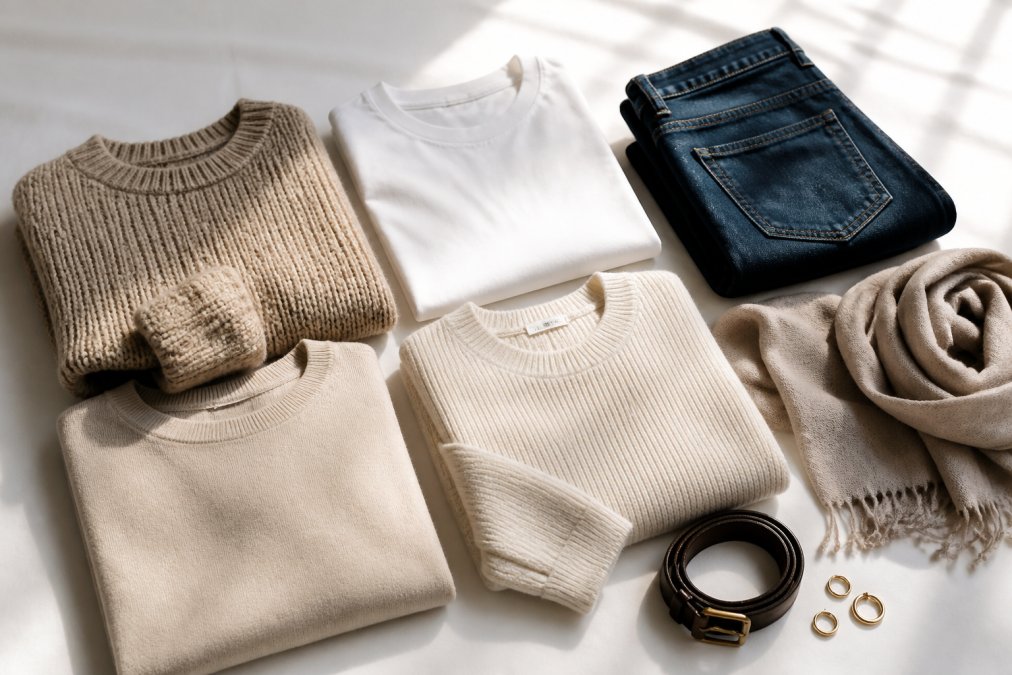
A capsule wardrobe solves the generic retail problem by design. Instead of owning dozens of pieces that don't work together, you own fewer items that coordinate completely. Every piece serves multiple purposes.
Begin with neutral basics: white tees, neutral sweaters, dark jeans, simple trousers. Add one or two accent colors that work with your skin tone. Build from there, adding pieces only when they coordinate with what you already own.
The budget advantage is significant. A $60 sweater worn 100 times costs 60 cents per wear. A $20 sweater worn 10 times costs $2 per wear. The math favors quality over quantity.
Sustainable clothing brands and independent designers work particularly well for capsule wardrobes because their pieces are designed for longevity and versatility. Before buying anything, ask whether it coordinates with at least three pieces you already own. If it doesn't, skip it.
Spotting Greenwashing and Finding Truly Ethical Brands
Not every brand claiming sustainability is actually sustainable. Real ethical brands provide specifics: they name their factories, disclose wages, explain material sourcing, and publish environmental impact data. When a brand is vague about these details, that's a red flag.
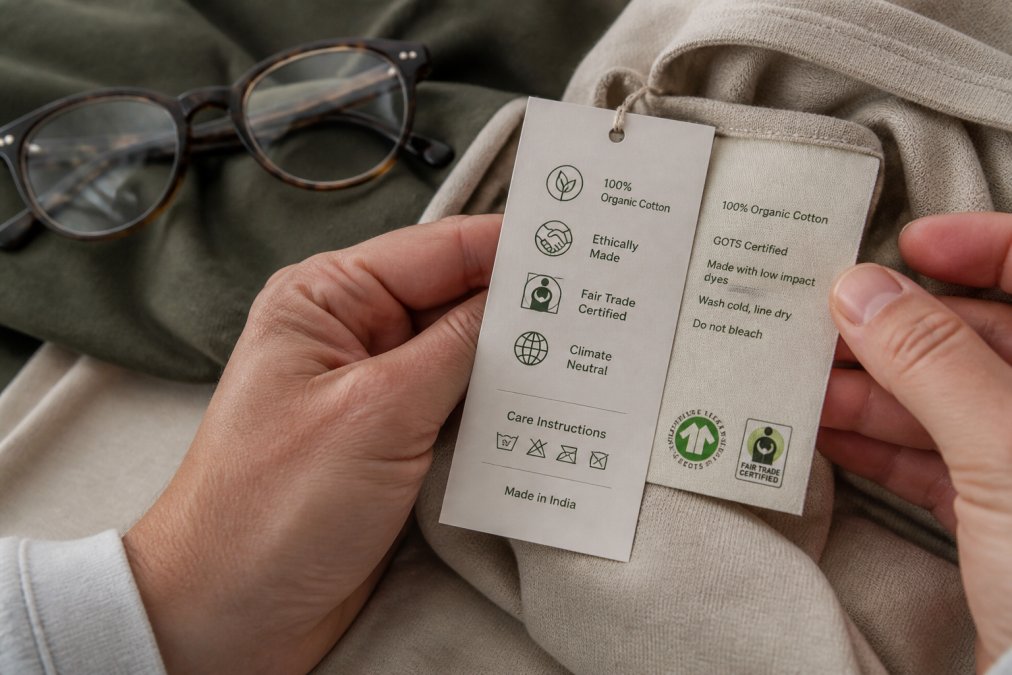
Look for third-party certifications. GOTS (Global Organic Textile Standard) for organic cotton means actual verification. Fair Trade Certification means wages and working conditions have been audited. B-Corp certification means the company has committed to verified social and environmental performance standards.
Transparency in supply chain matters. A brand that can trace every step from raw material to finished garment has nothing to hide. Material claims deserve scrutiny too: "eco-friendly" is meaningless without specifics. Organic cotton is verifiable. Recycled polyester is verifiable. Claims about "natural" or "green" materials without certification are marketing language.
Price is also a signal. Truly ethical production costs more because fair wages, quality materials, and responsible manufacturing aren't cheap. If a brand is claiming sustainability but pricing at fast-fashion levels, the math doesn't work.
Calculating Cost-Per-Wear to Justify Quality Investment
Cost-per-wear analysis transforms how you think about clothing spending. A $100 sweater worn 100 times costs $1 per wear. A $30 sweater worn 10 times costs $3 per wear. Suddenly, the more expensive option is actually cheaper when you account for longevity.
To calculate cost-per-wear, divide the purchase price by the number of times you'll realistically wear the piece. Be honest about this number. Pieces with high cost-per-wear are your best investments: basics that work across seasons and styles, neutral colors that coordinate with everything, quality construction that lasts.
Conversely, trendy pieces with low expected wear counts should be cheap or rented rather than purchased. This is where rental and subscription services provide actual value, letting you enjoy trends without the cost-per-wear penalty of ownership.
Generic retail clothing persists because it's convenient and cheap upfront. But the real cost, environmental, ethical, and personal, is hidden in the supply chain and revealed only when the garment falls apart. Alternatives to generic retail clothing address this by offering transparency, quality, and intentionality.
Whether you choose sustainable brands like Pact and Reformation, rental services like Nuuly, independent designers through Garmentory, or curated pieces from Moore Graphics LLC, the shift is the same: from passive consumption to active choice. Your wardrobe becomes something that reflects who you are rather than who retailers think you should be.
Frequently Asked Questions
What are the best alternatives to generic retail clothing?
Top alternatives include sustainable brands like Pact and Reformation for ethical basics, rental services like Nuuly and Rent the Runway for variety without commitment, and independent marketplaces like Garmentory for unique pieces. Curated subscription boxes like A Curated Thrift offer vintage finds, while personal styling services like UrbaneBox provide tailored selections. Each option addresses different needs: budget consciousness, sustainability, style diversity, or convenience. Choose based on whether you prioritize ethics, variety, uniqueness, or personalization.
How do I know if a sustainable clothing brand is actually ethical or just greenwashing?
Look for specific certifications: Fair Trade, GOTS (Global Organic Textile Standard), or B Corp status. Brands like Pact and Reformation transparently share their supply chain, labor practices, and environmental impact metrics. Greenwashing uses vague language like 'eco-friendly' without proof. Check if the brand discloses factory locations, wage standards, and material sourcing. Read independent reviews and certifications rather than relying on marketing claims alone. True ethical brands provide detailed information about their production process and materials.
What is cost-per-wear and how does it justify higher clothing prices?
Cost-per-wear divides the item's price by how many times you'll realistically wear it. A $100 sweater worn 200 times costs $0.50 per wear; a $20 fast-fashion tee worn 10 times costs $2 per wear. Quality pieces from sustainable brands or independent designers often have lower cost-per-wear because they last longer and remain in style. This metric helps justify investing in durable basics and investment pieces. Calculate expected wears based on versatility, durability, and how well pieces fit your capsule wardrobe to make smarter purchasing decisions.
How can I build a capsule wardrobe with unique pieces instead of generic basics?
Start with quality basics in neutral tones, then add personality through independent brands and curated marketplaces. Use services like Garmentory to discover emerging designers, or A Curated Thrift for one-of-a-kind vintage pieces. Choose pieces that mix and match across multiple outfits. Focus on garment longevity by selecting natural fibers and quality construction. Limit your palette to 2-3 core colors, then add accent pieces that reflect your personal style. This approach reduces waste, saves money through cost-per-wear, and ensures everything you own actually gets worn.