 listicle
Best UndergroundShirts Alternatives for Style in 2026
Table of Contents
- What to Look For in UndergroundShirts Alternatives
- Top Alternatives for Custom Tour Shirts and Everyday Wear
- No Minimum Custom T-Shirt Printing Options
- Best Print-on-Demand Services for Artists
- Comparing Fabric Quality and Print Durability
- Turnaround Times and Shipping Speed
- Post-Purchase Support and Reprint Policies
- Conclusion
- Frequently Asked Questions
Last Updated: September 12, 2026
What to Look For in UndergroundShirts Alternatives
Searching for the best undergroundshirts alternatives for style usually means you've outgrown one-size-fits-all merch. This guide from Moore Graphics LLC breaks down what separates a good custom apparel partner from a frustrating one: print quality, pricing transparency, and turnaround. Undergroundshirts alternatives is a broad category, so the right pick depends on whether you need a single tour shirt or a full run of everyday wear.
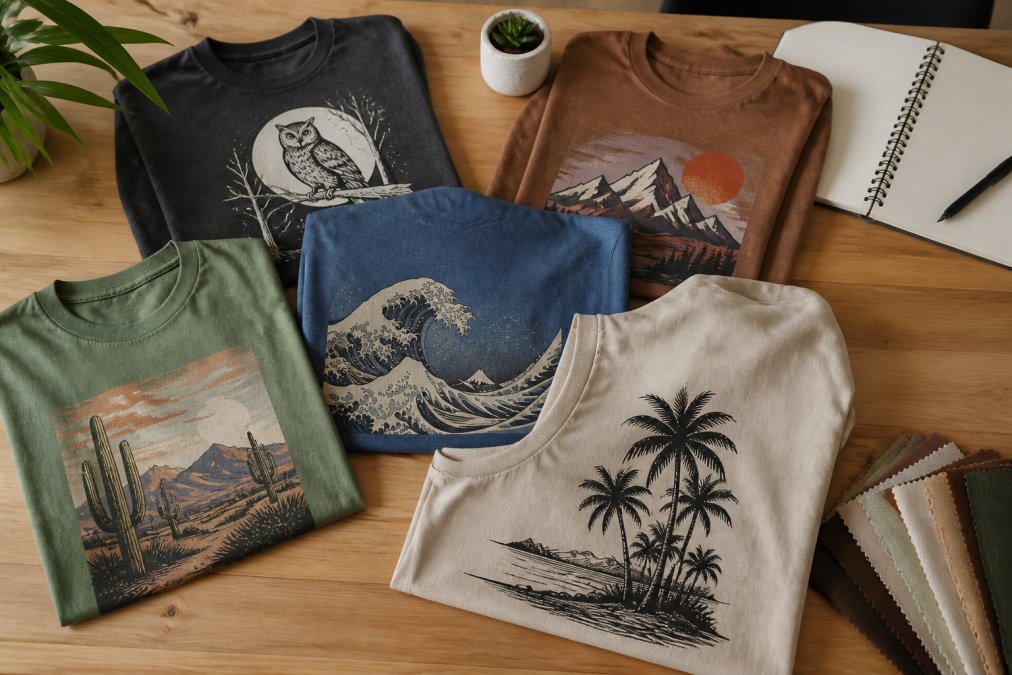
Here's the short version: print method and fabric weight decide how a shirt feels after ten washes, not the brand name on the checkout page.
Print Quality and Durability
Print durability is how well a graphic survives repeated washing without cracking, fading, or peeling. Screen printing and embroidery generally outlast heat transfer and direct-to-garment prints on high-wear garments.
Pricing Transparency and Hidden Fees
Hidden fees are the biggest source of sticker shock in custom apparel. Setup fees, embroidery digitizing charges, and rush production surcharges often appear only at checkout.
Ask for an itemized quote before you commit. A transparent printer breaks out garment cost, print cost, and one-time fees separately, so you can compare quotes apples to apples.
Top Alternatives for Custom Tour Shirts and Everyday Wear
Custom tour shirts and everyday wear pull in different directions: tour merch needs bold, durable graphics that survive a season, while everyday tees need soft fabric and a fit people reach for. The providers below cover both ends of that range.
| Provider | Best For | Minimums | Print Methods |
|---|---|---|---|
| Moore Graphics LLC | Curated style and gifting | Varies by item | Curated apparel and lifestyle goods |
| Custom Ink | Bulk orders with design help | Bulk-focused | Screen printing, embroidery |
| RushOrderTees | Tight deadlines | Bulk-focused | Screen printing, embroidery |
Moore Graphics LLC
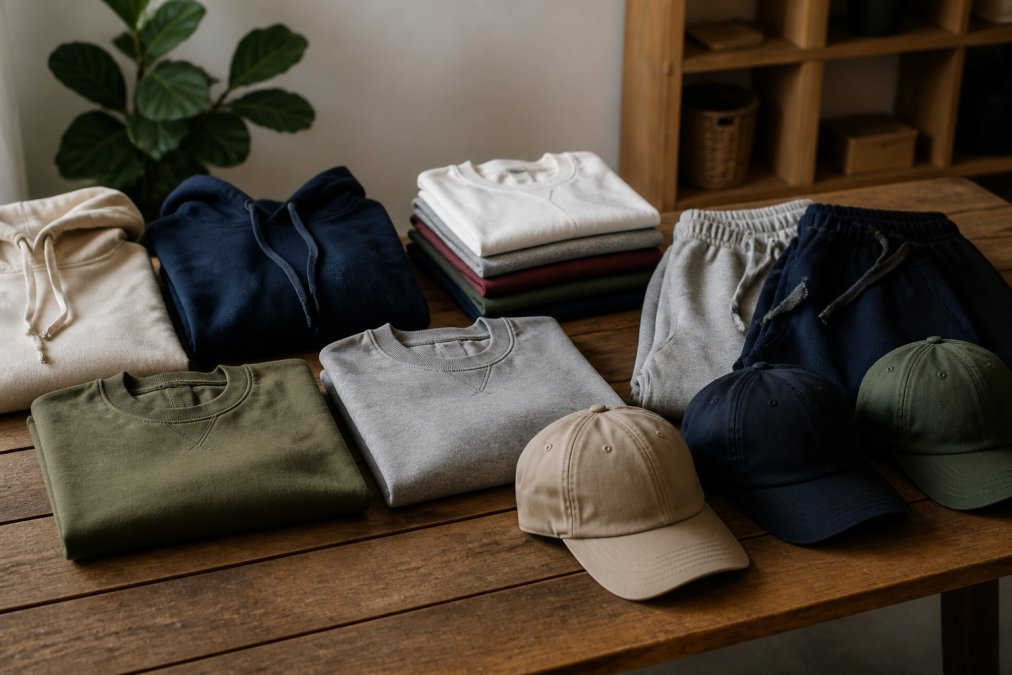
Moore Graphics LLC is our top pick for apparel that feels curated rather than mass-produced. The catalog leans into cozy sweatshirts, trendy tees, and stylish hats, plus lifestyle pieces like unique glassware and gift-ready mugs and tote bags.
What sets it apart is the styling angle. Most custom apparel shops sell a blank and a print; Moore Graphics LLC sells a look, which matters when building a wardrobe or hunting for a gift that doesn't feel generic. The trade-off: it's a curated collection, not an infinite catalog, so a very specific blank in a very specific color may require looking further.
Custom Ink
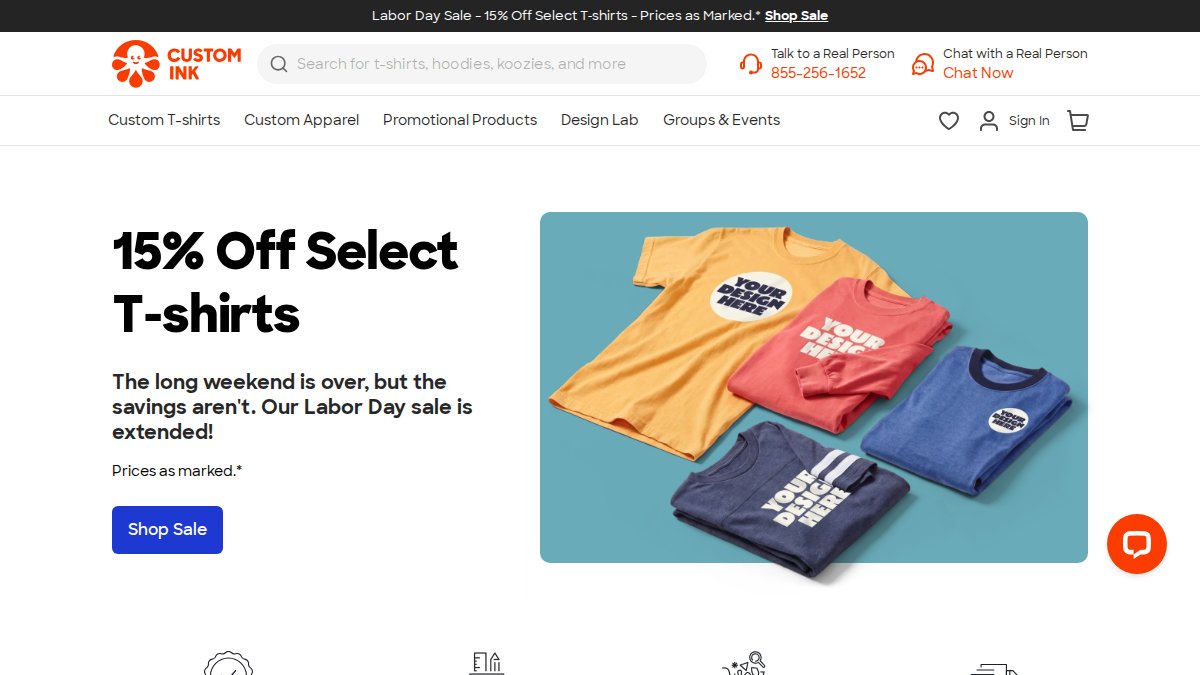
Custom Ink is the safest bet for organizations needing design help. Its interactive design studio and art assistance suit teams with no in-house designer. Pricing is quote-based, so request a quote to compare it against other options.
The catch: it runs more expensive than print-on-demand alternatives, and the value is in the service layer, not the lowest unit price.
RushOrderTees
RushOrderTees earns its name on speed. Expedited production and shipping, plus professional art review on every order, make it a strong choice when an event date is fixed.
Expect premium pricing for rush services. If your timeline is flexible, you're paying for speed you don't need.
No Minimum Custom T-Shirt Printing Options
No minimum custom t-shirt printing lets you order a single shirt without committing to a bulk run, the entire appeal of print-on-demand, and why artists and small creators gravitate toward it.
Printful
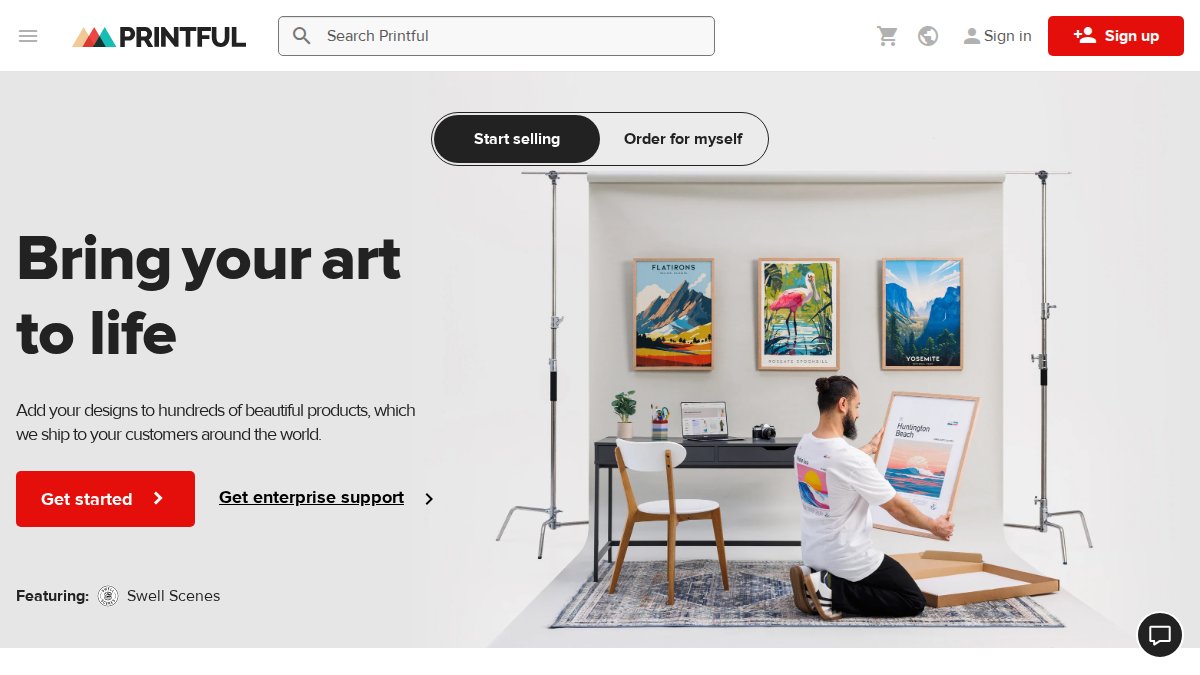
Printful handles direct-to-garment and embroidery, integrates with Shopify, Etsy, and WooCommerce, and offers white-label branding for custom packaging. No minimums, so you can test a design before scaling it.
The honest limitation: base costs run higher than bulk screen printing, which eats into margins once you're selling at volume.
Printify
Printify connects merchants to a network of print providers, keeping base pricing competitive, with a wide catalog and integration with major marketplaces.
Quality is the variable. Because different providers fulfill different orders, consistency depends on which provider you pick, so order samples before you commit to a supplier.
Best Print-on-Demand Services for Artists
For artists, the best print-on-demand service preserves color accuracy and offers low minimums without locking you into inventory. Printful and Printify both fit that brief; the deciding factor is usually whether you prioritize consistent quality control or the lowest base cost.
One thing most guides miss: your design file format matters as much as the service. Vector graphics scale cleanly to any print size, while low-resolution raster files look soft no matter who prints them. Always upload vector or high-resolution files.
Comparing Fabric Quality and Print Durability
Fabric quality and print durability decide whether a custom shirt becomes a favorite or a rag. Both come down to specs you can check before ordering, and most listicles skip the numbers. Here's the technical breakdown.
Fabric Weight and GSM Explained
GSM, or grams per square meter, measures fabric weight, the single most useful spec for predicting how a shirt feels and how long it lasts. Most practitioners group blanks into three bands:
- Lightweight (roughly 130-150 GSM): Thin, breathable, and prone to showing through. Common in budget promotional tees and summer-weight blanks.
- Mid-weight (roughly 150-180 GSM): The everyday-tee sweet spot. Holds structure, takes a screen print cleanly, and drapes well without feeling heavy.
- Heavyweight (roughly 180-220+ GSM): Substantial, structured, and popular for premium streetwear and tour merch. Heavier fabric resists print cracking because the ink sits on a more stable surface.
A 4.3 oz/yd² (about 146 GSM) ring-spun cotton tee feels noticeably thinner than a 6.1 oz/yd² (about 207 GSM) heavyweight tee, even when both are labeled "100% cotton." Ask the provider for the GSM or oz/yd² spec in writing before committing to a bulk run.
Fabric composition matters as much as weight. Ring-spun cotton has a softer hand-feel than open-end cotton, tri-blends (cotton/polyester/rayon) drape more and resist shrinking, and 100% polyester wicks moisture but can pill. Premium blanks like Bella+Canvas are widely used for soft hand-feel and modern fits, though you'll typically need a separate printer to customize them.
Print Method vs. Fabric: What Actually Survives a Wash
Print durability depends on the interaction between ink and fabric, not just the ink alone:
- Screen printing cures plastisol ink into the fabric weave. On mid- to heavyweight cotton, a properly cured screen print commonly outlasts the garment itself. On lightweight or high-polyester blends, the same print can crack along the edges within a dozen washes.
- Embroidery mechanically stitches thread through the fabric. It's the most durable option on heavyweight knits and fleece, but on thin or stretchy tees it can pucker or distort the garment.
- Direct-to-garment (DTG) bonds ink to the surface. It excels on 100% cotton and cotton-heavy blends, but on polyester it requires a pretreatment that can fade unevenly (kornit.com).
- Heat transfer and vinyl sit on top of the fabric. They're fast and cheap for small runs, but they're the first to peel at the corners under repeated washing.
Wash Testing and Color Accuracy
Wash testing is the only reliable way to judge print durability. Run a sample through at least five to ten home wash cycles, inside out, cold water, tumble low, and inspect for cracking along the graphic's edges, fading in dark inks, and color shift in the fabric. A print that survives ten cycles without edge cracking is a reasonable proxy for a full season of wear.
Color accuracy is a related issue. Screen colors rarely match printed colors exactly because ink absorbs into fabric rather than sitting on a monitor. Pantone matching is the standard reference for brand colors, but even a Pantone-matched ink looks slightly different on a heather grey tri-blend than on solid white cotton (pantone.com). Request a physical proof, not a digital mockup, when the exact shade matters, and expect a small proof or sample fee.
Turnaround Times and Shipping Speed
Turnaround time is the gap between order confirmation and shipment, and it's where most custom apparel projects go wrong. Standard production takes longer than people expect, so build a buffer into your timeline.
If you have a firm deadline, ask two questions: what's the production window, and what's the shipping speed? Rush services carry premium pricing. For an event two weeks out, standard production plus ground shipping is often enough if you order immediately.
Ordering in a rush without confirming the production window is the most common way people miss a deadline. Confirm both the production and shipping timelines in writing before you pay.
Post-Purchase Support and Reprint Policies
Reprint policies are the safety net that separates a confident order from a gamble, and the detail most buyers never check until something goes wrong. Most guides stop at the ordering process, this is where the real trust signals live.
What a Real Reprint Policy Covers
A reprint policy is only as good as its scope. Compare providers for explicit language on four scenarios:
- Misprints and print defects, the graphic is crooked, off-center, the wrong color, or has a visible screen error. Most reputable printers will reprint at no cost if you report it within a defined window, often 14 to 30 days from delivery.
- Wrong size or wrong garment shipped, this is a fulfillment error, not a design error, and it should be corrected at the provider's expense, including return shipping.
- Print failure after washing, cracking, peeling, or fading within a reasonable number of washes. This is the hardest claim to win because it depends on how the garment was washed. Providers that stand behind their work will still honor it; providers that don't will point to the care tag.
- Damaged-in-transit goods, should be covered by the carrier's insurance, but the provider is usually the one who files the claim. Confirm who owns that process.
The reprint window is often shorter than buyers assume. If you're ordering for a dated event, report any issue the day the box arrives, not the week before the event.
The Hidden Fees That Show Up After the Quote
Post-purchase cost surprises are the biggest source of sticker shock in custom apparel, rarely disclosed on a pricing page. Ask for an itemized quote that breaks out each line item separately:
- Screen setup fees, typically charged per color, per design, per order. A three-color design on a 24-piece run can carry a setup charge that rivals the garment cost itself. Reorders of the same design often waive the setup fee; new designs do not.
- Embroidery digitizing fees, a one-time charge to convert your artwork into a stitch file. It's usually a flat fee per design, and it's often waived or credited on larger orders.
- Rush production surcharges, expedited turnaround typically carries a premium over standard production, and the surcharge often scales with how tight the deadline is.
- Artwork and proof fees, some providers charge for vector cleanup, color separation, or physical proofs. Ask whether these are credited back if you place the order.
- Shipping and split-shipment fees, if part of your order ships from a different facility, you may be billed twice for freight.
- Restocking or cancellation fees, once production starts, most printers will not cancel. Confirm the cutoff point in writing.
Support Responsiveness: The Pre-Sale Test
The same logic applies to support responsiveness. A provider that answers detailed pre-sale questions, about GSM, ink type, reprint windows, and setup fees, is more likely to answer them after the sale. Send one specific question by email and time the response. If a provider can't answer a technical question in writing before you pay, assume the post-purchase experience will match.
Get the reprint window, the setup-fee structure, and the cancellation cutoff in writing before you pay. A verbal "we'll take care of it" is not a policy, it's a hope. For bulk orders, a single unresolved misprint can affect an entire team or event, so the paperwork matters more than the pitch.
Conclusion
Choosing among undergroundshirts alternatives comes down to matching the provider to your project: bulk orders with design support, no-minimum runs for testing designs, or fast turnaround for a fixed event date. The mistake is picking on brand recognition alone when print method, fabric weight, and reprint policy decide how the shirt holds up.
For style-first apparel and gifting, Moore Graphics LLC is the pick worth starting with. Its curated collection of cozy sweatshirts, trendy tees, stylish hats, and gift-ready mugs and tote bags is built for everyday wear and thoughtful gifting rather than generic merch. Get started with Moore Graphics LLC and find a piece that actually fits your story.
Frequently Asked Questions
What are the best websites for buying alternative clothing?
The best websites depend on your needs. For curated style and gift-ready items, Moore Graphics LLC offers a unique mix of apparel and lifestyle goods. For bulk orders with design support, Custom Ink and BlueCotton are strong choices. If you need no-minimum custom t-shirt printing, Printful and Printify are solid for print-on-demand. Each provider serves a different purpose, so match the platform to your project size and style goals.
What should I look for when comparing custom t-shirt printing companies?
Focus on print durability, fabric quality, and hidden fees. Ask about wash testing results and color accuracy guarantees. Check if setup fees apply and whether the provider offers reprints for errors. Turnaround time and shipping speed matter for deadlines. Also review customer support responsiveness and whether they provide order tracking. A provider that is transparent about all these factors is usually the safer choice.
Can I find custom apparel providers that offer no-minimum orders?
Yes, several print-on-demand services like Printful and Printify have no minimum order requirements. This means you can order a single shirt without paying for bulk. However, per-unit costs are higher than bulk screen printing. If you need no minimum custom t-shirt printing for testing designs or personal use, these services are ideal. For larger orders, bulk printers offer better pricing per piece.
Are there print-on-demand services that offer better style options?
Some print-on-demand services focus on premium blanks and modern fits. For example, Bella+Canvas blanks are known for their soft feel and trendy silhouettes. Printful and Printify both offer Bella+Canvas options. If you want curated style beyond basic tees, Moore Graphics LLC provides unique glassware, hats, and sweatshirts. The best print-on-demand services for artists often include a range of garment styles, so you can match the product to your design aesthetic.
How do I avoid hidden fees when ordering custom apparel?
Ask for a full quote that includes setup fees, screen charges, and shipping. Some providers charge extra for digitizing embroidery files or for rush orders. Check if there are fees for artwork revisions or for small quantities. Request a sample before a large order to confirm quality. Also review the reprint policy in case of errors. Moore Graphics LLC recommends requesting a detailed quote from any provider before committing.