 listicle
Best Bonfire Alternatives for Unique Apparel
Table of Contents
- Why Bonfire Alternatives Matter for Custom Apparel
- Print-on-Demand vs. Inventory-Based Models: Understanding Your Options
- How to Start a Clothing Brand Online With Print-on-Demand Platforms
- Best Print-on-Demand for Small Business: Top Bonfire Alternatives Compared
- Printful: Premium Quality and E-Commerce Integration
- Redbubble: Artist-Focused Marketplace With Global Reach
- Spring: Advanced Design Tools for Creators and Influencers
- Custom Ink: Bulk Orders and Group Merchandise
- Printify: Competitive Pricing and Vendor Flexibility
- Zazzle: Extensive Product Catalog Beyond Apparel
- Merch by Amazon: Access Amazon's Customer Base
- Organic Blank: Sustainable and Ethical Sourcing
- Key Differences: Quality, Customization, and Fulfillment
- Sustainability and Post-Purchase Experience
- Choosing the Right Platform for Your Needs
- Frequently Asked Questions
Last Updated: August 28, 2026
Why Bonfire Alternatives Matter for Custom Apparel
Choosing the right print-on-demand platform shapes your operational workflow, scalability, quality control, and customer loyalty. While Bonfire has strengths, the landscape offers diverse alternatives with different approaches to fulfillment, design flexibility, profit margins, and audience reach. At Moore Graphics LLC, we understand that every creator and brand has different needs, some prioritize sustainability, others need bulk ordering, many want direct control over margins. This guide breaks down eight distinct platforms, each with its own strengths and trade-offs across production quality, customization tools, pricing, and post-purchase experience.
Print-on-Demand vs. Inventory-Based Models: Understanding Your Options
Print-on-demand means you design products, set your profit margin, and only produce items when customers order. No inventory, upfront costs, or unsold stock risk. The trade-off is higher per-unit production costs and longer fulfillment times.
Inventory-based models require manufacturing and stocking products in advance. You commit capital upfront and absorb unsold inventory risk, but gain lower per-unit costs at scale and faster shipping.
For most creators launching their first collection, print-on-demand makes sense, you validate demand without financial exposure. Inventory-based approaches become attractive once you've proven demand for specific products. Many successful brands use both: print-on-demand for experimental designs and inventory-based manufacturing for proven bestsellers.
How to Start a Clothing Brand Online With Print-on-Demand Platforms
Starting a clothing brand online with print-on-demand requires three core components: a design, a platform, and an audience strategy.
Step 1: Create or Source Your Designs
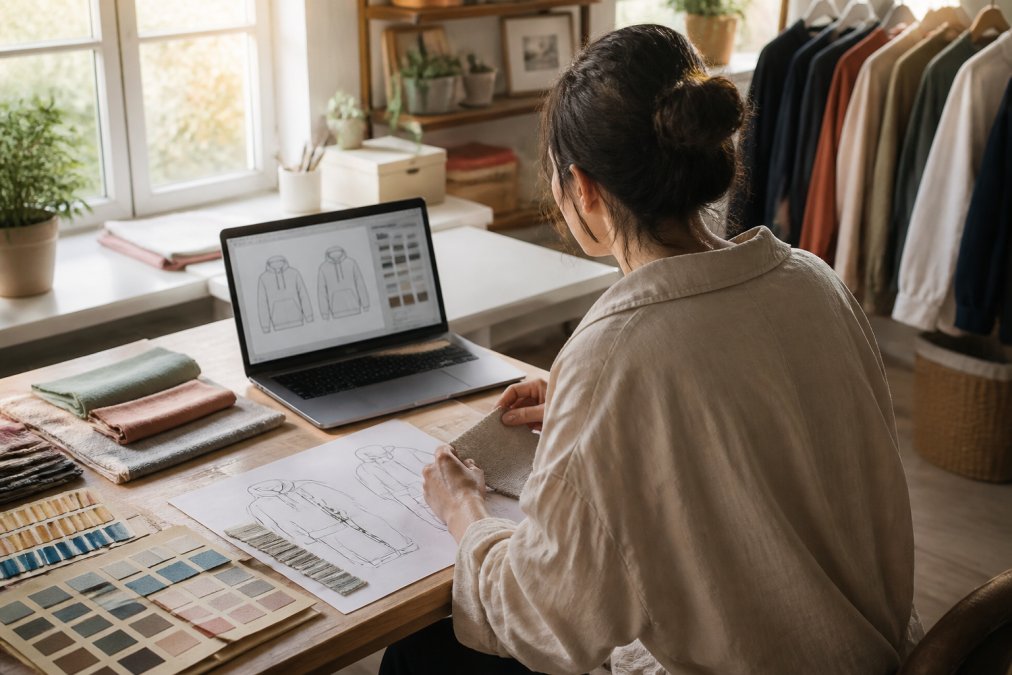
Your designs are your brand's foundation. Create original artwork using Canva or Adobe Creative Suite, hire a designer on Fiverr or Upwork, or source from stock art platforms. Ensure your designs are unique and legally yours to use commercially.
Step 2: Choose Your Print-on-Demand Platform
Select based on your priorities. Printful or Printify excel at seamless e-commerce integration. Redbubble or Zazzle are built for artists reaching existing customers. Custom Ink is designed for groups and events.
Step 3: Upload Designs and Configure Products
Upload artwork, select which products to offer, and set profit margins. The platform generates mockups so customers see the final product before ordering.
Step 4: Set Up Your Sales Channel
Sell through the platform's built-in marketplace (Redbubble, Zazzle, Merch by Amazon) for access to existing traffic but limited branding, or connect your own e-commerce store (Shopify, Etsy, WooCommerce) to a fulfillment platform like Printful or Printify for full control.
Step 5: Drive Traffic and Build an Audience
Build an email list, create social media content, collaborate with creators in your niche, or run targeted ads. The platform handles production; you drive the customers.
Step 6: Monitor Quality and Customer Feedback
Order samples before promoting widely. Test print quality, fabric feel, and durability. Read customer reviews carefully. Your brand's reputation depends on what customers receive.
Best Print-on-Demand for Small Business: Top Bonfire Alternatives Compared
Printful: Premium Quality and E-Commerce Integration
Printful integrates with over 20 e-commerce platforms including Shopify, Etsy, WooCommerce, and Wix (printful.com). It handles production and shipping globally with consistent quality control and reliable turnaround times. A classic unisex t-shirt costs around $14.10 before your profit margin (printful.com). Printful prioritizes quality and customer experience over maximum profit margins.
Best for: E-commerce sellers where quality and seamless integration matter most.
Pros: Consistent quality, extensive product catalog, reliable fulfillment, strong integrations.
Cons: Higher base costs, customer service delays during peak periods.
Redbubble: Artist-Focused Marketplace With Global Reach
Redbubble operates as a marketplace where artists upload designs and Redbubble handles production, shipping, and customer service. The platform's biggest advantage is access to millions of existing buyers, you don't need to drive traffic yourself. Artists set profit margins around 20% of base product price and can adjust per product (redbubble.com).
Best for: Independent artists and creators who want to sell globally without managing their own storefront.
Pros: Massive built-in audience, no upfront costs, artists control margins, global reach.
Cons: Lower profit margins, limited brand control, less pricing flexibility.
Spring: Advanced Design Tools for Creators and Influencers
Spring offers advanced design tools with layering, text effects, and color manipulation. It integrates with YouTube, Instagram, and TikTok, making it easy to sell directly to your audience. Creators get their own ongoing storefront. Transaction fees are around 20% of profit.
Best for: Content creators and influencers monetizing their audience directly.
Pros: Advanced design tools, social media integration, higher profit margin flexibility, ongoing storefront.
Cons: Higher transaction fees, no bulk discounts, smaller marketplace.
Custom Ink: Bulk Orders and Group Merchandise
Custom Ink focuses on bulk orders for groups, teams, and events. The intuitive design lab includes extensive clip art and font libraries. Pricing is all-inclusive with no hidden fees, and the platform offers rush and free shipping options with dedicated customer service and design assistance.
Best for: Groups, teams, and organizations needing custom apparel for specific events.
Pros: Excellent for bulk orders, all-inclusive pricing, user-friendly design tools, strong customer service.
Cons: Higher costs due to bulk minimums, less suitable for individual sales, not designed for long-term brand building.
Printify: Competitive Pricing and Vendor Flexibility
Printify connects you with a global network of print providers, offering over 800 customizable products. You can choose different providers for different products based on price, location, or quality. It integrates with major e-commerce platforms. A premium plan at $29 per month increases profit margins.
Best for: E-commerce businesses seeking flexibility, competitive pricing, and massive product selection.
Pros: Largest product catalog, competitive pricing, flexible vendor selection, free tier available.
Cons: Quality varies between vendors, less branding control, requires vendor management.
Zazzle: Extensive Product Catalog Beyond Apparel
Zazzle offers thousands of customizable products across apparel, office supplies, home decor, and gifts. Sellers set royalty rates up to 99% on some products with no minimum order quantities. The platform's strength is breadth, sell custom apparel alongside mugs, photo books, and wall art.
Best for: Creators seeking a versatile platform with diverse customizable products.
Pros: Vast product catalog, no minimum orders, generous royalty rates, large customer base.
Cons: Profit margins vary by product, less fundraising focus, complex pricing structure.
Merch by Amazon: Access Amazon's Customer Base
Merch by Amazon is invite-only, maintaining quality standards. Once approved, you sell custom merchandise directly on Amazon's marketplace, reaching millions of buyers. Amazon handles production, shipping, and customer service. You upload designs, set pricing, and earn royalties.
Best for: Approved creators and businesses leveraging Amazon's customer base.
Pros: Access to millions of shoppers, no inventory management, simple design upload, Amazon handles service.
Cons: Invite-only limits accessibility, less brand control, reduced customer relationship building.
Organic Blank: Sustainable and Ethical Sourcing
Organic Blank offers high-quality apparel made from 100% organic cotton or recycled materials with eco-friendly manufacturing and ethical sourcing. Customization includes screen printing, direct-to-garment printing, and embroidery. Pricing requires contacting the company for a quote.
Best for: Brands prioritizing sustainable and ethically produced custom apparel.
Pros: Organic and recycled materials, high-quality fabrics, eco-friendly manufacturing, ethical sourcing.
Cons: Quote-based pricing lacks transparency, likely minimum orders, not for individual sales.
| Platform | Best For | Pricing Model | Key Strength |
|---|---|---|---|
| Printful | E-commerce sellers | Pay-per-product | Consistent quality, integrations |
| Redbubble | Independent artists | Commission-based | Built-in marketplace audience |
| Spring | Content creators | Commission-based | Social media integrations |
| Custom Ink | Groups and bulk orders | Pay-per-product, bulk discounts | Group merchandise focus |
| Printify | Flexible vendors | Free tier + premium | Largest product catalog |
| Zazzle | Multi-category sellers | Royalty-based | Diverse product range |
| Merch by Amazon | Approved sellers | Royalty-based | Amazon customer access |
| Organic Blank | Sustainable brands | Quote-based | Eco-friendly materials |
Key Differences: Quality, Customization, and Fulfillment
Quality Control varies significantly. Printful maintains in-house production for consistent quality. Printify's multi-vendor model offers competitive pricing but introduces quality variation. Test samples before scaling, especially with Printify.
Customization Tools range from basic to advanced. Redbubble and Zazzle offer straightforward interfaces for artists without technical skills. Spring provides advanced tools with layering and text effects. Custom Ink includes extensive clip art libraries useful for groups without design experience.
Fulfillment Speed ranges from 3-5 business days for most platforms to 7-10 days for some vendors. Direct-to-garment printing is faster but works best on lighter fabrics. Screen printing takes longer but produces more durable results.
Shipping Options vary. Most offer standard and expedited shipping. Custom Ink explicitly offers free shipping options. International shipping availability is broader with Printful and Redbubble than some competitors.
Sustainability and Post-Purchase Experience
Sustainability has moved from niche to mainstream expectation, especially among younger consumers.
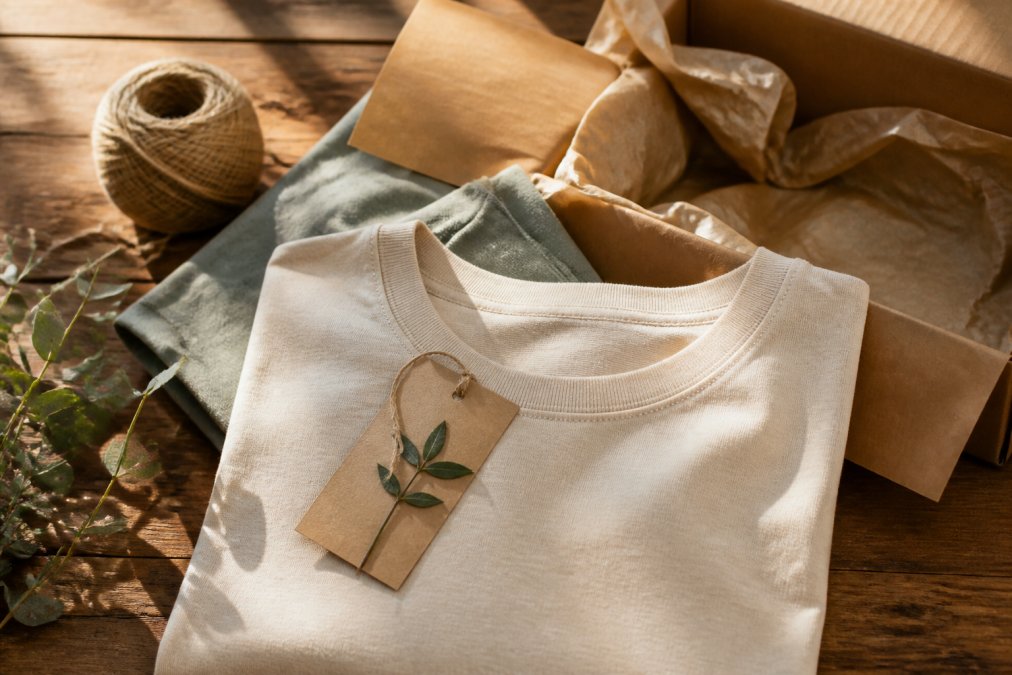
Material Sourcing is where most platforms fall short. Printful, Redbubble, Printify, and others use conventional cotton and polyester blends. Organic Blank stands apart by committing exclusively to organic cotton and recycled materials with transparent manufacturing and ethical sourcing.
Post-Purchase Experience determines repeat customers. This includes packaging quality, unboxing experience, care instructions, and issue responsiveness. Most print-on-demand platforms handle shipping adequately but don't prioritize unboxing. Custom Ink excels with dedicated customer service. Printful's in-house production enables faster issue resolution.
Return Policies vary significantly. Printful and Custom Ink offer clear, straightforward processes. Redbubble defers to marketplace policies, which can be less transparent.
Customer Communication is often overlooked but critical. Platforms providing tracking information, production updates, and responsive support create better experiences. Custom Ink excels here. Marketplace platforms feel more impersonal.
Choosing the Right Platform for Your Needs
If you're an independent artist, Redbubble and Zazzle offer access to existing marketplaces without requiring you to drive traffic. Profit margins are lower, but operational burden is minimal.
If you're building a brand with your own audience, Printful and Printify offer flexibility to integrate with your e-commerce store. You maintain full control over branding, pricing, and customer experience.
If you're a content creator or influencer, Spring is purpose-built with direct integrations to YouTube, Instagram, and TikTok.
If you're organizing a group or event, Custom Ink is the clear choice, designed for bulk orders and group coordination.
If sustainability is a core value, Organic Blank is the only platform prioritizing eco-friendly materials and ethical manufacturing.
If you want maximum flexibility and product selection, Printify offers the largest catalog and multi-vendor approach.
Consider your growth trajectory. You may start with Redbubble to test designs with minimal risk, then transition to Printful or Printify once you've validated demand. Many successful brands use multiple platforms simultaneously.
Choosing the right platform for your apparel brand isn't about finding the universally "best" option, it's about matching your business model, audience, and values to a platform designed for that approach. Moore Graphics LLC helps creators and brands build collections that tell their story, and the right fulfillment partner is essential. Whether you prioritize quality, sustainability, audience reach, or profit margins, the best bonfire alternatives for unique apparel offer distinct paths forward. Start with your non-negotiables, test with samples, and scale with the platform that aligns with your vision.
Frequently Asked Questions
What are the main differences between Bonfire alternatives for print-on-demand?
Bonfire alternatives vary significantly in their approach. Printful and Printify focus on seamless e-commerce integration with extensive product catalogs and multiple printing techniques like direct-to-garment and embroidery. Redbubble and Zazzle operate as marketplaces where artists upload designs and earn royalties. Spring offers advanced design tools and social media integration for creators. Custom Ink specializes in bulk orders with all-inclusive pricing. Organic Blank prioritizes sustainable materials and ethical sourcing. The right choice depends on whether you want a hosted marketplace, your own storefront, or focus on eco-friendly production.
How do I start a clothing brand online using print-on-demand?
Choose a print-on-demand platform that matches your business model. Create an account, upload your designs using their design interface or mockup generator, and set your pricing and profit margins. Most platforms handle production, fulfillment, and shipping automatically. Integrate with your e-commerce platform if you're building your own store, or use their built-in marketplace. Focus on quality control by ordering samples first, then market your products through social media and email. Track customer feedback and adjust designs based on performance metrics.
Which is the best print-on-demand for small business?
The best choice depends on your specific needs. Printful excels for e-commerce businesses seeking consistent quality and extensive integrations. Printify offers competitive pricing and vendor flexibility, making it ideal for cost-conscious startups. Spring suits creators with social media audiences who want advanced design tools. Custom Ink works well for businesses needing bulk orders with reliable fulfillment. For sustainability-focused small businesses, Organic Blank provides ethically sourced apparel. Evaluate based on your product needs, budget, target audience, and whether you prioritize marketplace reach or owning your brand identity.
What should I consider when evaluating Bonfire alternatives?
Compare profit margins, base costs, and revenue share models. Assess the design interface for ease of use and customization capabilities. Check shipping times, turnaround times, and fulfillment reliability. Review product quality through customer reviews and sample orders. Examine e-commerce integrations if you're building a store. Consider whether the platform supports your preferred printing methods (screen printing, direct-to-garment, embroidery). Evaluate customer retention features like campaign management tools and mockup generators. Finally, assess sustainability practices and post-purchase customer experience, including return policies and quality guarantees.