 ultimate-guide
Ethical Sourcing in Modern Apparel Production
Table of Contents
- What Ethical Sourcing in Modern Apparel Production Actually Means
- Fair Trade Clothing Certifications That Actually Mean Something
- How to Identify Ethical Fashion Brands Without Getting Fooled
- Transparency in Fashion Supply Chains: From Raw Material to Retail Shelf
- Technology's Role: Blockchain and AI in Ethical Sourcing
- The Real Cost: What Ethical Sourcing Means for Small and Mid-Size Brands
- U.S. Regulations and Compliance Oversight for Apparel Sourcing
- Conclusion
- Frequently Asked Questions
Last Updated: September 14, 2026
What Ethical Sourcing in Modern Apparel Production Actually Means
Ethical sourcing in modern apparel production is the practice of making clothing in ways that protect the people who make it and the environment it touches, from raw material to finished garment. This guide breaks down what that looks like in practice, which certifications are worth trusting, and how to spot a brand that is only pretending.
The stakes are high. The apparel industry has spent decades chasing the lowest possible cost, and the U.S. Department of Labor's reports on forced labor in global supply chains show how often that pursuit has come at the expense of worker welfare. Buyers are pushing back, and brands are responding, but the gap between marketing language and real practice is still wide.
The Core Pillars: Fair Labor, Sustainable Materials, and Traceability
Three pillars hold up any credible ethical sourcing program: fair labor practices, sustainable materials, and traceability. Remove one and the whole structure wobbles.
Fair labor means fair wages, safe conditions, and the right to organize. Sustainable materials means fibers and dyes that reduce environmental impact rather than add to it. Traceability means knowing, and being able to prove, where every input came from. A brand that talks about eco-friendly methods but cannot name its factories is not sourcing ethically. It is sourcing conveniently.
Fair Trade Clothing Certifications That Actually Mean Something
Fair trade clothing certifications are third-party programs that verify a brand meets specific labor, environmental, or material standards. They matter because self-reported claims are almost impossible to check.
A common mistake is treating every badge as equal. Some certifications audit the full production lifecycle, from raw material sourcing to finished garment. Others only cover a single fiber or a single facility. The difference is enormous.
Which Certifications Apply in the U.S. Market
The certifications you will see most often on apparel sold here include:
- Fair Trade Certified - verifies fair wages, safe conditions, and community premiums
- GOTS (Global Organic Textile Standard) - covers organic fiber and processing
- B Corp Certification - measures overall corporate accountability, not just sourcing
- OEKO-TEX - tests for hazardous chemicals in finished textiles
- GRS (Global Recycled Standard) - verifies recycled content in materials
How to Identify Ethical Fashion Brands Without Getting Fooled
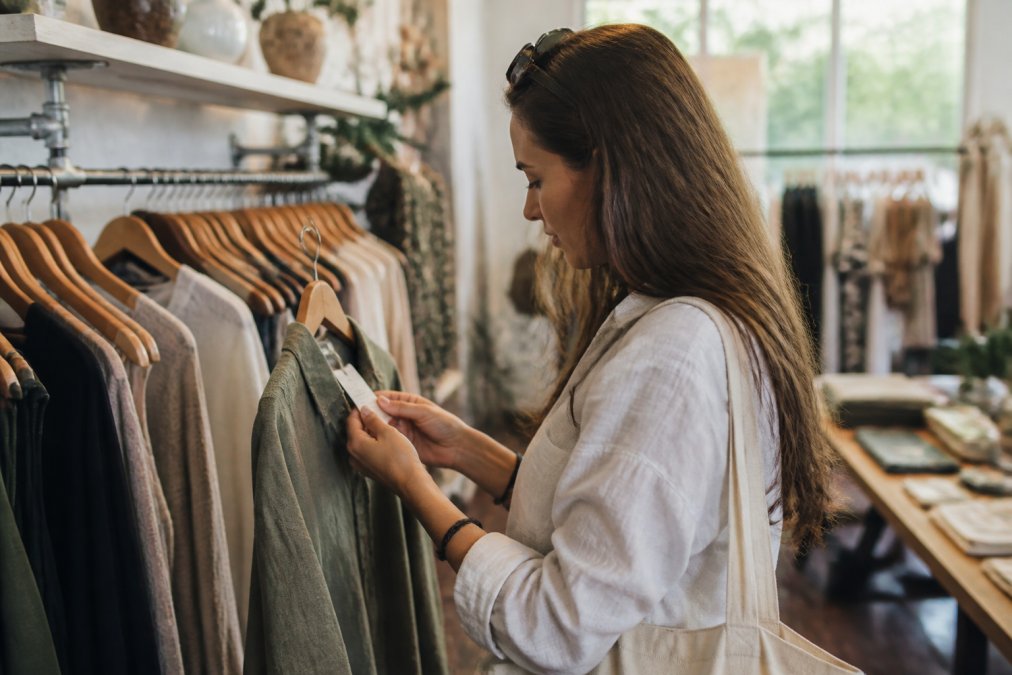
To identify an ethical fashion brand, check whether it names its factories, publishes its supplier list, and can explain where its raw material sourcing happens. Vague language about "conscious values" without specifics is the clearest warning sign.
Red Flags and Green Flags to Look For
Red flags to watch for:
- No factory names or locations anywhere on the site
- "Sustainable" used as a mood, not a measurement
- Certifications shown as images with no certificate numbers
- No mention of worker welfare or fair wages at all
Green flags that signal real commitment:
- A published supplier list, updated at least annually
- Named certifications with verifiable numbers
- Specific claims about materials ("100% GOTS-certified cotton," not "eco-friendly fabric")
- A public report on auditing processes and results
Transparency in Fashion Supply Chains: From Raw Material to Retail Shelf
Transparency in fashion supply chains means a brand can trace a garment from fiber to finished product and is willing to show that trail publicly. Traceability is the mechanism; transparency is the willingness to share it.
Most textile supply chains have four or more tiers: raw material, yarn and fabric, cut-and-sew, and finishing. The deeper you go, the harder the trail gets to follow. This is where supply chain mapping becomes essential, and where most brands quietly give up.
Technology's Role: Blockchain and AI in Ethical Sourcing
Blockchain and AI are changing how brands verify ethical claims. Blockchain creates an unchangeable record of each handoff in the supply chain, so a cotton bale's origin cannot be quietly rewritten later. AI tools scan supplier data, shipping records, and audit reports to flag inconsistencies before they become a compliance problem.
Neither technology fixes a broken supply chain on its own. They make good data verifiable and bad data harder to hide. For brands that already know their suppliers, these tools turn due diligence from a yearly scramble into a continuous process.
The Real Cost: What Ethical Sourcing Means for Small and Mid-Size Brands
Ethical sourcing costs more upfront, and small brands feel it first. But "it costs more" is not a budget. For a small or mid-size brand trying to decide whether to switch, the useful question is which specific cost lines go up, by how much in relative terms, and what the offsetting savings look like. Most competitors stop at the headline. Here is the breakdown.
The Cost Lines That Actually Move
- Certified raw materials. GOTS-certified cotton, GRS-certified recycled polyester, and Fair Trade Certified inputs carry a premium over conventional equivalents. The premium varies by fiber and by order volume, and it is largest on small runs where the brand has no leverage.
- Audit and certification fees. Third-party audits are paid for by the brand or the factory, and the cost is often passed through. Certification bodies also charge annual fees to maintain a certificate, not just a one-time audit fee.
- Smaller minimum order quantities. Ethical factories frequently run higher MOQs because their compliance overhead is fixed. A brand that used to order 300 units may be asked for 1,000, which ties up cash in inventory.
- Slower lead times. Traceable supply chains add documentation and verification steps. The time cost shows up as longer production cycles and more working capital tied up before a garment sells.
- Internal labor. Someone has to maintain the supplier list, chase certificate numbers, and prepare disclosure documents. For a small brand, that is often a part-time role that did not exist before.
The Offsetting Savings Most Brands Underestimate
- Avoided remediation cost. Rebuilding a supply chain after a labor or forced-labor finding is far more expensive than building it correctly the first time. The cost is not just the new supplier, it is the lost inventory, the recall, and the reputational hit.
- Reduced import risk. A shipment held under a Withhold Release Order can be excluded entirely. The value of avoiding that is the full landed cost of the goods plus the revenue they would have generated.
- Marketing substantiation. A verifiable certification number is a claim a brand can actually make in advertising. An unsubstantiated "sustainable" claim is a liability under the FTC Green Guides, not an asset.
- Supplier stability. Factories that meet labor and environmental standards tend to have lower turnover and fewer disruption events, which reduces the hidden cost of scrambling for a replacement mid-season.
A Practical Sequencing Framework for Small and Mid-Size Brands
Trying to claim full compliance across every pillar at once is the most common way small brands fail. A more durable path is to sequence:
- Pick one pillar and get it genuinely right. Traceability is usually the highest-leverage starting point because it is the prerequisite for everything else, you cannot verify labor or materials you cannot trace.
- Map the supply chain before buying certifications. Certification without a supplier map is a logo, not a system.
- Start with the tier you control. Cut-and-sew is usually the tier a brand has the most direct relationship with. Prove traceability there before pushing upstream to fiber.
- Expand tier by tier as volume grows. The per-unit cost of certification falls as order volume rises, so the economics improve as the brand scales.
U.S. Regulations and Compliance Oversight for Apparel Sourcing
Compliance oversight in apparel sourcing is enforced through a patchwork of federal rules rather than one single law. No statute says "your supply chain must be ethical." Instead, several agencies each police a slice of the problem, and a brand has to satisfy all of them at once. Understanding which agency does what is the difference between a defensible sourcing program and a stack of unverifiable marketing claims.
The Federal Rules That Actually Touch Apparel Sourcing
| Regulation or Body | What It Covers | How It Operates in Practice |
|---|---|---|
| FTC Green Guides | Environmental marketing claims | The Guides are not a standalone ban; they define when a claim like "eco-friendly" or "sustainable" is deceptive under the FTC Act. A vague claim with no substantiation is the trigger. |
| U.S. Customs and Border Protection forced labor enforcement | Imported goods | CBP can issue a Withhold Release Order on a shipment when it has reason to believe forced labor was used. The burden then falls on the importer to prove the goods are clean, or they are excluded. |
| FTC textile labeling rules | Fiber content, country of origin, care | Requires accurate fiber content and origin disclosure on most apparel. Mislabeling is a separate violation from a sourcing violation, and it is easier for regulators to prove. |
| UFLPA (Uyghur Forced Labor Prevention Act) | Imports from a designated region | Shifts the default: goods from the covered region are presumed to be made with forced labor unless the importer can rebut the presumption with clear and convincing evidence. |
| State supply chain transparency laws | Public disclosure | A handful of states require companies over a size threshold to publish supply chain disclosure statements. Requirements and thresholds vary by state. |
What "Compliance" Actually Requires of a Brand
Meeting these rules is not a single filing. In practice, a brand has to be able to produce, on demand:
- A supplier list with names and locations, not just country names
- Documentation tracing a finished garment back to the fiber or raw material
- Substantiation for every environmental claim on a hangtag or product page
- Records showing the importer exercised reasonable care over the supply chain
The pattern most practitioners describe is that the paperwork is the hard part, not the sourcing itself. A brand can source ethically and still fail an audit because it cannot prove what it did.
Where the Regulatory Landscape Is Heading
The direction of travel is toward mandatory supply chain due diligence rather than voluntary disclosure. The practical implication for a brand today is that the traceability work required by a future mandate is the same work that protects a shipment from a Withhold Release Order right now. Building the documentation trail early is cheaper than retrofitting it under an enforcement deadline.
Conclusion
Building a genuinely ethical supply chain is hard, slow work, and most brands are still figuring out where to start. If you want apparel that reflects your values, Moore Graphics LLC offers a curated collection of cozy sweatshirts, trendy tees, stylish hats, and gift-ready mugs and tote bags designed for everyday life. Explore the collection at Moore Graphics LLC and wear something you feel good about.
Frequently Asked Questions
What is an example of ethical sourcing in apparel production?
An example is a brand that maps its entire textile supply chain, pays verified fair wages at every tier, uses certified organic or recycled materials, and publishes third-party audit results. This includes knowing which garment manufacturing facilities cut and sew the fabric, not just the final assembly point. Brands that practice ethical sourcing also maintain cradle-to-grave visibility, tracking environmental impact from raw material sourcing through disposal or recycling.
How can consumers verify if a clothing brand is truly ethical?
Start by checking for recognized fair trade clothing certifications like Fair Trade Certified, GOTS, or B Corp status. Then look for transparency in fashion supply chains: does the brand publish a supplier list? Can you trace a specific garment back to its factory? Visit the brand's website and search for a sustainability report or impact page. If a brand makes vague claims without third-party verification or specific factory names, treat those claims with caution.
What role do third-party certifications play in apparel production?
Third-party certifications verify that a brand meets specific ethical standards for labor conditions, environmental impact, and material sourcing. They provide independent compliance oversight rather than self-reported claims. Common certifications include Fair Trade Certified, GOTS for organic textiles, and OEKO-TEX for hazardous chemicals testing. These programs require regular auditing processes, which means a certified brand has documentation to back up its ethical sourcing claims.
How does ethical sourcing impact the cost and durability of clothing?
Ethical sourcing typically raises production costs because fair wages, safer working conditions, and eco-friendly methods cost more than exploitative alternatives. That higher cost often translates to a higher retail price. However, garments made with sustainable materials and quality control tend to last longer, which reduces how often you replace them. The trade-off is paying more upfront for a piece that holds up over time versus buying cheaper items that wear out quickly.
What are the biggest challenges to implementing ethical sourcing in global supply chains?
The main barriers include limited visibility beyond tier-one suppliers, cost pressure from fast-fashion competitors, and inconsistent enforcement across different countries. Many brands do not know who their raw material sourcing providers are beyond the first tier. Supply chain mapping across multiple countries is expensive and time-consuming. Additionally, without uniform global standards, brands face a patchwork of regulations that makes compliance oversight difficult to maintain consistently.
Is a well-known athletic brand like lululemon considered ethical?
That depends on which standards you apply. Some large athletic brands have made progress on transparency in fashion supply chains by publishing supplier lists and investing in sustainable materials. However, ethical sourcing is not binary. A brand can score well on environmental impact while still facing questions about labor conditions in lower tiers. Check specific certifications, audit reports, and whether the brand discloses factory-level information before deciding.