 ultimate-guide
How to Pick Quality Lifestyle Products That Last
Table of Contents
- Why Your Choice of Quality Lifestyle Products Matters
- The Real Cost of Cheap: The Value of Quality Over Quantity
- Signs of High Quality Clothing and Home Goods
- How to Build a Capsule Wardrobe That Works
- Use Warranty and Repairability as Quality Indicators
- Evaluate Ethics, Sustainability, and Manufacturing Standards
- Your Framework for Choosing Quality Lifestyle Products
- Conclusion
- Frequently Asked Questions
Last Updated: September 5, 2026
Why Your Choice of Quality Lifestyle Products Matters
Every purchase is a vote for the kind of world you want to live in, and learning how to pick quality lifestyle products is the most effective way to stop wasting money on items that end up in a landfill within a season. Choosing better items isn't about snobbery; it's about smarter economics.
This guide gives you a testable framework for inspecting materials, evaluating construction, and using warranties as a signal of confidence, a repeatable process for buying items that last.
The Real Cost of Cheap: The Value of Quality Over Quantity
The value of quality over quantity becomes obvious when you look at the lifetime of the item. A cheap t-shirt that loses its shape after ten washes forces you to buy a replacement twice a year, while a well-made garment purchased with a focus on durability can last for years (peer-reviewed research).
The Cost-Per-Use Calculation
To make this tangible, use the cost-per-use metric, the most honest way to evaluate any purchase.
- Formula: Divide the total price of the item by the number of times you realistically expect to wear or use it.
- Cheap Item Example: A $15 shirt worn 20 times before it fades costs $0.75 per use.
- Quality Item Example: A $60 shirt worn 150 times over three years costs $0.40 per use.
In this scenario, the "expensive" shirt is actually cheaper. Apply this math to investment pieces like coats, bags, and shoes, and the financial argument for buying better becomes undeniable.
The Psychology of Consumption and Planned Obsolescence
Many products are designed with planned obsolescence, intentionally built to fail or become unfashionable quickly to drive repeat purchases. Breaking this cycle of consumer habits requires intentional buying: pausing to ask if an item fills a genuine gap in your life and if its build quality justifies its place in your home.
Signs of High Quality Clothing and Home Goods
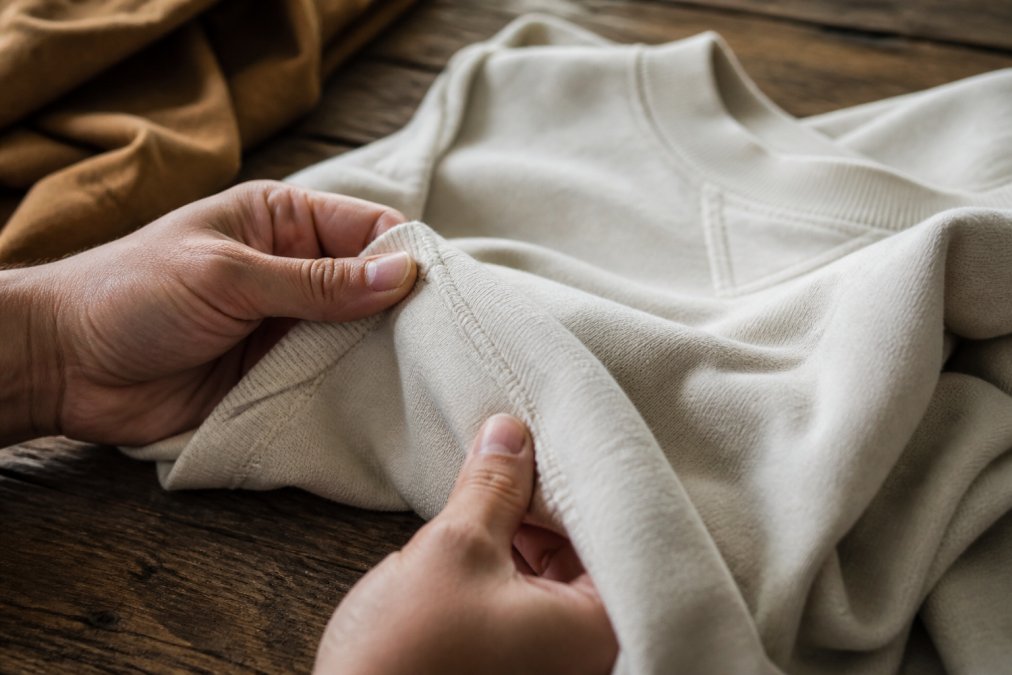
Learning to identify signs of high quality clothing and home goods is a skill that pays for itself. You do not need to be a textile expert; just engage your senses and inspect the item like a detective, focusing on materials and seams.
Material Integrity and Textile Quality
The foundation of any good product is its material integrity. Natural fibers like 100% cotton, merino wool, and linen generally outperform cheap synthetics in breathability and longevity. Hold fabric up to the light; if you can see through a basic t-shirt, it is too thin to survive repeated washing. A high-quality textile should feel substantial with a tight weave, a key indicator of textile quality.
The In-Store Quality Test: Objective Checks You Can Perform
Beyond visual inspection, you can run simple, objective tests in the store to separate durable goods from disposable ones.
The Zipper Stress Test: A zipper is often the first point of failure on a jacket, bag, or pair of jeans. Hold the fabric on either side of the zipper and pull firmly in opposite directions. A quality zipper will hold fast; a weak one will separate or show gaps between the teeth. Next, zip and unzip it ten times in a row. A smooth, consistent action suggests a well-installed zipper from a reputable manufacturer like YKK, the industry standard used by most premium brands.
The Fabric Pilling Rub Test: Pilling, those little balls of fiber that form on the surface of a sweater or shirt, is a sign of short-staple fibers or poor spinning. Rub the fabric vigorously between your palms for about 15 seconds. If you see even a hint of fuzz or loose fibers starting to ball up, that garment will pill noticeably after a few washes. A quality fabric will remain smooth and undisturbed.
The Seam Pull Test: Seams are the structural skeleton of any garment. Gently pull the fabric on either side of a seam, stretching it to about 80% of its limit. Do the threads pull apart, creating a visible gap, or do they hold firm? Also, check the seam allowance, the fabric between the stitching and the raw edge. A minimum of 5/8 of an inch (about 1.5 cm) is standard for quality garments; anything less means the seam is more likely to unravel over time.
The Button and Snap Torque Test: Buttons and snaps are often the first things to fail on shirts and outerwear. Hold the button between your thumb and forefinger and twist it firmly, as if trying to unscrew it. A quality button will be anchored with a shank or cross-stitch that holds it tight against the fabric; a cheap button will wobble or feel loose. For snaps, pull them apart and press them together five times. The action should be crisp, not mushy, and the metal should not bend or deform.
The Hardware Weight Test: For bags, belts, and outerwear, pick up the item and focus on the metal hardware, buckles, zipper pulls, and rivets. Quality hardware is almost always made of solid zinc, brass, or stainless steel, which gives it a noticeable heft. If a buckle or zipper pull feels light or hollow, it is likely a zinc alloy with a thin plating that will chip or corrode within a year. Tap the hardware with your fingernail; a solid piece will produce a clear 'ping,' while a plated piece will sound dull.
Construction, Craftsmanship, and Hardware Durability
While fabric is the canvas, construction is the frame. Look for straight, tight, consistent stitches and reinforced stitching at stress points like the shoulders and crotch. Craftsmanship shows in details like patterns that match at the seams. For home goods and accessories, hardware durability matters most: zip pulls should glide smoothly, buttons should be securely attached, and metal hardware should feel heavy and solid, the hallmark of quality assurance in manufacturing.
The Stitch Density Check: Count the stitches per inch on a visible seam. A quality garment typically has 8 to 12 stitches per inch; fewer than that, say, 5 or 6, means the seam is weaker and more likely to pop under stress (extension.iastate.edu). This quick, objective metric immediately separates a $20 shirt from a $60 one.
The Lining and Finish Test: Flip the garment inside out. A quality item will have clean, finished seams, either serged, bound, or flat-felled. Raw, fraying edges inside a jacket or bag are a red flag. Also, check the lining: is it attached securely at the hem and armholes? A lining that hangs loose or is made of a slippery, thin polyester will tear or bunch up within months.
How to Build a Capsule Wardrobe That Works
Learning how to build a capsule wardrobe is about curating a small collection of interchangeable, high-quality pieces you love to wear. It is a practical application of the quality-over-quantity philosophy, forcing you to consider the functional design and versatility of every item.
Start With Versatile Investment Pieces
Begin by identifying the investment pieces that form the backbone of your wardrobe, items you wear weekly, like well-fitting jeans, a classic white shirt, or a cozy sweatshirt. Prioritize neutral colors and timeless silhouettes that can be dressed up or down, creating a cohesive collection where every top works with every bottom. This improves the user experience of getting dressed, ensuring you always have something you feel good in.
Use Warranty and Repairability as Quality Indicators
A generous warranty is one of the most reliable signals of a manufacturer's confidence, making it a powerful tool for evaluating warranty coverage. A lifetime guarantee on a backpack or a multi-year warranty on a jacket is essentially a bet that the product will not fail. A lack of any warranty often suggests the manufacturer expects the item to wear out quickly, a hallmark of poor value proposition.
Beyond the warranty, consider the repairability of the item. Can the shoe sole be replaced? Is the zipper a standard size a tailor can swap out? Products designed to be repaired offer a better product lifecycle and reduce waste. A quick search for "replacement parts" or "repair guides" for that brand reveals its commitment to longevity, a critical part of consumer research most shoppers skip.
Evaluate Ethics, Sustainability, and Manufacturing Standards
The quality of a product is inextricably linked to how it is made. You cannot separate the durability of a product from the conditions under which it was produced; a brand that cuts corners on labor or environmental standards is also likely to cut corners on materials.
Ethical Sourcing and Quality Assurance
Look for transparency in ethical sourcing and manufacturing standards. Brands proud of their factories often list them or share production details. Does the brand publish its factory list? Does it name the mills where its fabrics are sourced? This transparency is a strong sign of sustainable consumption practices and a commitment to quality assurance beyond the final product.
Your Framework for Choosing Quality Lifestyle Products
Here is a simple, repeatable framework to use when shopping, whether online or in a store.
| Evaluation Step | What to Look For | Red Flag |
|---|---|---|
| Material Check | Natural fibers, dense weave, substantial feel | See-through fabric, scratchy interfacing |
| Construction Scan | Tight, straight stitching; reinforced stress points | Loose threads, uneven hems, misaligned patterns |
| Hardware Test | Heavy, solid zippers and buttons that move smoothly | Lightweight, plastic-feeling parts |
| Warranty Review | Generous warranty or guarantee offered | No warranty or vague "limited" terms |
| Brand Research | Transparent about factories and sourcing | No information about manufacturing |
This framework gives you the confidence to assess the price-to-performance ratio of any item. A high price tag means nothing without the material integrity and craftsmanship to back it up. By using this checklist, you shift your focus from initial cost to long-term utility, ensuring every dollar is an investment in your daily comfort and style.
The Second-Hand Quality Assessment: Finding Gems in the Resale Market
The same framework applies when shopping second-hand, but the signals change. In a thrift store or on a resale platform, you cannot rely on a brand's marketing or warranty; you must rely entirely on your ability to read the physical object.
The Age Test: The single best indicator of quality in a second-hand item is its age. A wool sweater that has survived 20 years of wear is, by definition, well-made. Look for signs of use but not failure, faded fabric is fine, but thinning fabric or frayed seams are not. If a piece has lasted this long, it will likely last another decade with proper care.
The Brand Decoder: In a thrift store, branding is often obscured. Instead of relying on a logo, look for the physical markers of quality: dense fabric, reinforced seams, and solid hardware. A pair of leather boots with a Goodyear welt, where the sole is stitched, not glued, to the upper, can be resoled multiple times, regardless of the label (vcleat.com). This construction is a hallmark of premium footwear.
The Wear Pattern Analysis: Examine how an item has worn. On jeans, check the crotch and knees; pilling or thinning in these high-stress areas indicates low-quality denim, even if the brand is premium. On a leather bag, check the corners and strap attachment points. Cracking or peeling indicates bonded leather, which cannot be repaired; full-grain or top-grain leather will develop a patina, not crack.
The Repair Potential Check: Before buying second-hand, ask: Can this be fixed if it breaks? Are the zippers a standard size a tailor can replace? Is the boot sole stitched or cemented? A cemented sole can sometimes be re-glued, but it is rarely worth the cost of professional repair; a stitched sole can be replaced for a fraction of the cost of new boots. This is the essence of repairability and a key factor in the product lifecycle.
The Online Resale Verification: When shopping on platforms like eBay, Poshmark, or The RealReal, ask the seller for specific photos of the seams, hardware, and fiber-content tags. A seller unwilling to provide these is often hiding a defect. Also, search the item name with "defect" or "review" to find known issues with that model, a form of consumer research that can save you from buying a counterfeit or a known lemon.
Conclusion
The challenge is to resist the quick fix and embrace the patience of intentional buying. It requires more effort upfront, but the payoff is a home and wardrobe filled with items that fit well, feel good, and last for years. At Moore Graphics LLC, we curate our collection of cozy sweatshirts, trendy tees, and unique glassware with these exact standards in mind.
Get started with Moore Graphics LLC and build a collection of quality lifestyle products that truly reflect your story, without the guilt of wasteful consumption.
Frequently Asked Questions
What are the best quality of life items to buy?
The best quality of life items are the ones you use daily and that hold up to that wear and tear. Focus on essentials like a comfortable sweatshirt, a sturdy mug, or a well-made tote bag. Use the cost-per-use test: divide the price by how often you will use it. A durable item used hundreds of times is a better investment than a cheaper one that wears out quickly, regardless of the initial price tag.
How can you tell if a product is high quality before buying?
Look for clear signs of high quality clothing and goods. Check the material composition: natural fibers like cotton and wool often outperform synthetic blends for comfort and longevity. Examine the construction, including stitching and seams, and test the hardware on bags or jackets. A generous warranty and a clear repair policy are strong quality indicators that the manufacturer trusts the product's durability.
Why is it better to invest in quality over quantity?
The value of quality over quantity comes down to cost-per-use and sustainability. Buying one well-made item that lasts for years is often cheaper than replacing a cheap version several times over the same period. This approach also reduces waste and supports ethical manufacturing standards. Instead of a closet full of seldom-worn pieces, a curated selection of durable goods simplifies decisions and improves your daily experience.
What materials indicate high-quality apparel and home goods?
For apparel, look for materials like long-staple cotton, merino wool, and linen, which offer better durability and comfort than basic synthetic blends. In home goods, check for materials like borosilicate glass for drinkware, which resists thermal shock, and kiln-dried hardwood for furniture. High-quality items list their materials clearly, and the material sourcing often points to a higher level of quality assurance and manufacturing standards.
Frequently Asked Questions
Q: What are the best quality of life items to buy?
A: The best quality of life items are the ones you use daily and that hold up to that wear and tear. Focus on essentials like a comfortable sweatshirt, a sturdy mug, or a well-made tote bag. Use the cost-per-use test: divide the price by how often you will use it. A durable item used hundreds of times is a better investment than a cheaper one that wears out quickly, regardless of the initial price tag.
Q: How can you tell if a product is high quality before buying?
A: Look for clear signs of high quality clothing and goods. Check the material composition: natural fibers like cotton and wool often outperform synthetic blends for comfort and longevity. Examine the construction, including stitching and seams, and test the hardware on bags or jackets. A generous warranty and a clear repair policy are strong quality indicators that the manufacturer trusts the product's durability.
Q: Why is it better to invest in quality over quantity?
A: The value of quality over quantity comes down to cost-per-use and sustainability. Buying one well-made item that lasts for years is often cheaper than replacing a cheap version several times over the same period. This approach also reduces waste and supports ethical manufacturing standards. Instead of a closet full of seldom-worn pieces, a curated selection of durable goods simplifies decisions and improves your daily experience.
Q: What materials indicate high-quality apparel and home goods?
A: For apparel, look for materials like long-staple cotton, merino wool, and linen, which offer better durability and comfort than basic synthetic blends. In home goods, check for materials like borosilicate glass for drinkware, which resists thermal shock, and kiln-dried hardwood for furniture. High-quality items list their materials clearly, and the material sourcing often points to a higher level of quality assurance and manufacturing standards.