 ultimate-guide
Guide to Buying Sustainable Lifestyle Goods in 2026
Table of Contents
- What Makes a Product Truly Sustainable?
- How to Identify Greenwashing Before You Buy
- Sustainable Materials to Look For (and What to Avoid)
- Your Eco-Friendly Shopping Checklist for Every Purchase
- How to Shop Ethically on a Budget
- End-of-Life Planning: What Happens After You're Done With It
- Sustainable Digital Consumption: The Overlooked Carbon Footprint
- Conclusion: Building a Sustainable Lifestyle That Lasts
- Frequently Asked Questions
Last Updated: September 13, 2026
What Makes a Product Truly Sustainable?
A sustainable lifestyle starts with one uncomfortable truth: most products sold as "green" are not. This guide to buying sustainable lifestyle goods breaks down how to tell the difference before you spend money, and the answer rarely lives on the front of the label.
A sustainable product is one designed, made, used, and disposed of in a way that limits environmental harm across its entire lifecycle. That covers where the raw materials came from, how far they traveled, who made them, and what happens when you're finished with them. A cotton tote that falls apart in three months is not greener than a plastic bag you reuse for a year.
Most shoppers stop at the material. The real test is the full product lifecycle.
- Source: recycled, organic, or renewable inputs
- Production: ethical sourcing without forced or underpaid labor
- Use: built to last through repeated wear and washing
- End of life: compostable, recyclable, or repairable
The throughline for everything below: sustainability is a habit of asking better questions, not a label you buy.
How to Identify Greenwashing Before You Buy
Greenwashing is marketing that makes a product look more environmentally responsible than it is. The fix sounds simple, ignore the front of the label and check the back, but the back of the label is where the real work starts. Competitors tell you to "look for certifications." This section tells you how to verify one in under two minutes.
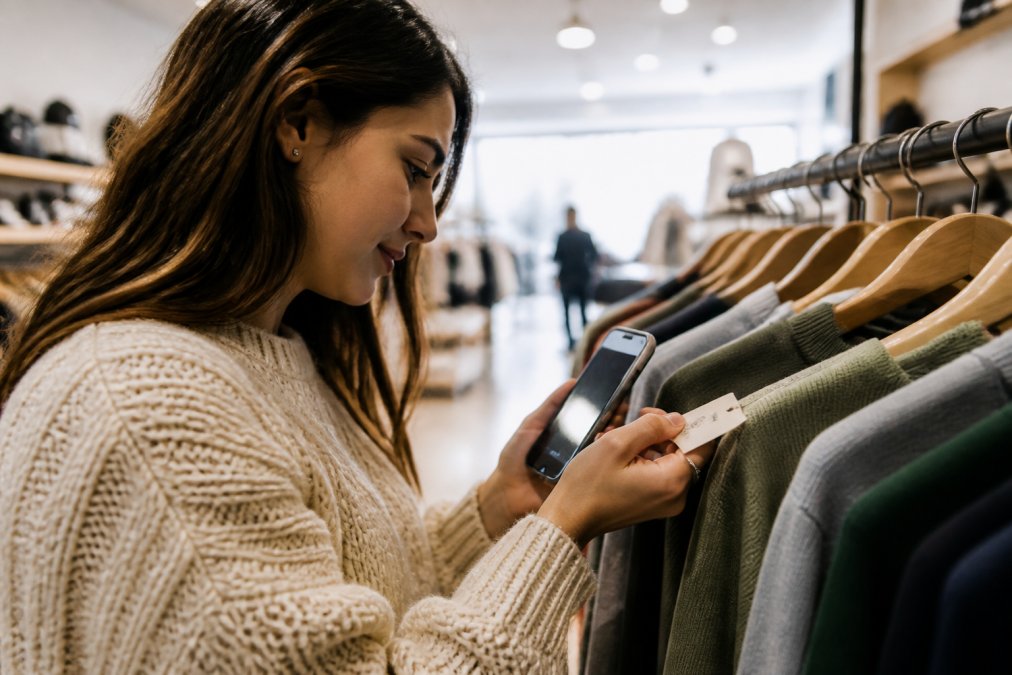
Vague Claims vs. Verifiable Proof
"Eco-friendly," "natural," "green," and "planet-positive" mean almost nothing on their own. The Federal Trade Commission's Green Guides set the standard for environmental marketing claims, and vague, unqualified terms without proof are exactly what they warn against. The Guides also flag two patterns shoppers miss:
- Overstated benefits, a claim that is technically true but implies a bigger impact than the product delivers (a single recycled component marketed as a "recycled product").
- Hidden trade-offs, one green attribute used to distract from a larger problem (a "plastic-free" package on a product shipped from overseas).
Verifiable proof looks like a named certification, a specific recycled percentage, or a published supply chain report. If a brand cannot produce one of those three on request, treat the claim as unproven.
Certifications That Actually Mean Something
Third-party certifications carry weight because an outside body audits the claim. The ones worth knowing by category:
- Food and textiles: USDA Organic certification
- Labor and fair trade: Fair Trade Certified and Fairtrade International
- Overall social and environmental performance: B Corp (administered by B Lab)
- Forest-derived paper and wood: Forest Stewardship Council (FSC)
- Textile safety and chemical limits: OEKO-TEX Standard 100
- Building and interiors: Cradle to Cradle Certified
A logo from an organization you cannot find outside the brand's own website is a red flag. So is a certification that expired, many are renewed annually, and the certificate number is usually printed near the mark.
How to Verify a Certification in Two Minutes
This is the step most guides skip. Here is the actual mechanism:
- Find the certifying body's name, not just the logo. Logos are easy to copy; the issuing organization is harder to fake.
- Search the organization's name plus "accredited" to confirm it is recognized by a standards body rather than self-declared.
- Look up the certificate number on the certifier's own public database. Most major certifiers maintain a searchable registry.
- Check the scope. A company may hold a certification for one product line and not another. The certificate lists exactly what is covered.
- Check the date. An expired certificate is not a certification.
Browser Tools That Do the Checking for You
A newer category of tools automates part of this. Browser extensions and apps can surface a brand's certifications, ownership, and supply chain disclosures while you shop, and some cross-reference public databases for you. Treat them as a first pass, not a verdict, they aggregate public data, and public data has gaps. The two-minute manual check above is still the backstop.
The Greenwashing Red-Flag Checklist
Before you buy, scan for these:
- A vague claim with no named certification or percentage
- A certification logo with no issuing organization named
- A "green" product line from a company whose main business is not green
- Sustainability language on the front, silence on the back
- A claim about one attribute that ignores the product's largest impact
If two or more of these are present, walk away. The product may still be fine, but the marketing has not earned your trust.
Sustainable Materials to Look For (and What to Avoid)
Material choice matters, but it is only one piece of the puzzle. Here is how the common options stack up.
| Material | Why It Works | Watch Out For |
|---|---|---|
| Organic cotton | Grown without synthetic pesticides | Still water-intensive |
| Recycled polyester | Diverts plastic from landfills | Sheds microplastics |
| Hemp | Low water, fast-growing | Rougher texture |
| Bamboo lyocell | Closed-loop processing | "Bamboo" without lyocell label |
| Conventional cotton | Cheap and abundant | Heavy pesticide use |
Fabrics and Fibers Worth Your Money
Organic cotton, hemp, linen, and recycled wool are solid choices because they reduce pesticide use or divert waste. The key is durability. A well-made organic cotton sweatshirt that lasts years beats three cheap ones that pill after a month.
Materials That Sound Green but Aren't
Bamboo is the classic trap. Unless the label says "lyocell" or "viscose" from a closed-loop process, the fiber was likely chemically processed like rayon. "Vegan leather" is usually plastic. Neither is automatically better.
Your Eco-Friendly Shopping Checklist for Every Purchase
Run every purchase through the same short list before you check out. It takes about 30 seconds.
- Is the material specific, not just "natural"?
- Is there a named, verifiable certification?
- Will I use this at least 30 times?
- Can it be repaired or recycled?
- Is there a secondhand version that works?
- Do I need it, or do I want it?
The last question is the hardest and the most important. Intentional purchasing beats guilt-driven shopping every time.
How to Shop Ethically on a Budget
Ethical shopping has a reputation for being expensive. That reputation is partly wrong and partly a real barrier, and most guides paper over the difference. This section does the opposite: it shows where the cost actually lands and how to work around it.
The Real Cost Math
A cheap item is rarely cheap once you divide by how long it lasts. A well-made garment worn weekly for three years costs less per wear than a fast-fashion piece that pills after a season. The catch is cash flow: the durable option usually costs more up front, and not every household can absorb that. Pretending otherwise is where most sustainability advice loses people.
Secondhand Is the Biggest Lever
Thrift stores, consignment shops, and online resale platforms let you buy quality pieces at a fraction of retail while extending a product's life. For apparel, housewares, and furniture, resale is often the single highest-impact swap because it requires no new manufacturing at all. The trade-off is time and inconsistency, you buy what is available, not what you pictured.
Buy Local When It Makes Sense
Buying from small local makers cuts shipping distance and often gets you better-made goods with a traceable supply chain. It is not automatically greener, a local maker using conventional materials can have a larger footprint than a well-audited overseas producer, but for heavy, bulky, or perishable items, local usually wins on transport.
Where Sustainability Advice Fails Lower-Income Households
This is the part most guides skip. Several common recommendations assume resources not everyone has:
- Buying in bulk assumes storage space and up-front cash.
- Buying durable assumes you can pay more today for savings later.
- Shopping farmers markets assumes a market nearby and time to get there.
- Buying organic assumes a price premium is affordable.
A more honest framing: sustainability is a spectrum, not a pass/fail test. The highest-impact actions for a tight budget are usually the free ones, using what you already own longer, repairing before replacing, and buying secondhand when the option exists. Those cost nothing and often cut emissions more than a premium new purchase would.
A Budget-First Priority Order
If money is tight, work down this list and stop wherever you run out of room:
- Use what you have longer. No purchase, no impact.
- Repair before you replace. A patch, a resole, or a stitch is almost always cheaper than new.
- Buy secondhand first for apparel, glassware, and furniture.
- Buy local when the price is comparable.
- Buy new and certified only when the first four are not options.
The Accessibility Angle Most Guides Miss
Sustainable shopping advice is often written for people with disposable income and flexible time. A genuinely useful guide names that bias and offers lower-cost entry points instead of pretending the premium option is the only one. Secondhand, repair, and reuse are not consolation prizes, they are frequently the higher-impact choices.
End-of-Life Planning: What Happens After You're Done With It
Most sustainability guides stop at the checkout. The real test comes later.
Before buying, ask where the item goes when you're finished. Clothing can go to textile recycling or donation. Glass and metal are widely recyclable. Mixed-material items, like a mug with a plastic lid, often end up in landfill because the parts cannot be separated.
A circular economy approach means designing for the second life, not just the first sale. When you buy, favor items that can be repaired, refilled, or recycled cleanly.
Sustainable Digital Consumption: The Overlooked Carbon Footprint
Physical goods get all the attention. Your digital habits have an environmental impact too.
Streaming, cloud storage, and endless scrolling all consume energy in data centers. The International Energy Agency's data centre energy tracking shows that data centers account for a meaningful and growing share of global electricity demand.
Practical steps that cost nothing:
- Delete unused files and duplicate photos from cloud storage
- Unsubscribe from marketing emails you never open
- Lower streaming resolution when you're not watching closely
- Keep devices longer instead of upgrading yearly
Sustainable digital consumption is the easiest win because it requires no purchase at all.
Conclusion: Building a Sustainable Lifestyle That Lasts
The hardest part of conscious consumption is consistency. It is easy to buy one green product and call it done. Building a sustainable lifestyle means repeating the same questions across every purchase, from apparel to glassware to gifts.
That is where Moore Graphics LLC fits. Our curated collection of cozy sweatshirts, trendy tees, stylish hats, and unique glassware is designed for everyday life and built to be gifted, so you can shop with intention without sacrificing comfort or personality.
Frequently Asked Questions
What defines a sustainable lifestyle product?
A sustainable lifestyle product considers its environmental impact across the entire product lifecycle, from raw material sourcing through manufacturing, shipping, use, and disposal. It typically uses eco-friendly materials, comes from a supply chain with labor rights protections, minimizes packaging waste, and has a clear path for recycling or upcycling when you're done with it. No product is perfectly sustainable, but the best ones show verified progress on multiple fronts rather than vague claims.
How can I tell if a brand is truly sustainable or just greenwashing?
Look for specific, verifiable claims rather than vague phrases like 'eco-friendly' or 'natural.' Check whether the brand names its certifications (such as Fair Trade, GOTS, or B Corp), publishes supply chain transparency reports, and provides concrete data on carbon footprint or waste reduction. If a brand can't tell you where its materials come from or what happens at the end of a product's life, that's a red flag. Third-party verification tools and browser extensions can help you check claims quickly.
What certifications should I look for when shopping for eco-friendly goods?
The most useful certifications depend on the product type. For textiles, look for GOTS (Global Organic Textile Standard) or OEKO-TEX. For fair labor practices, Fair Trade Certified is a strong indicator. B Corp certification covers a company's overall social and environmental performance. For wood and paper products, check for FSC (Forest Stewardship Council) labeling. These certifications require third-party audits, which makes them harder to fake than self-reported claims.
How do I start transitioning to a more sustainable lifestyle on a budget?
Start with what you already own before buying anything new. When you do need something, prioritize secondhand options first, then look for durable items made from sustainable materials. Focus your spending on items you'll use daily, like apparel or drinkware, where the environmental impact per use is lowest. Buying one well-made item that lasts five years beats buying five cheap versions that wear out. Intentional purchasing matters more than spending more.
How does sustainable shopping impact the environment?
Sustainable shopping reduces waste sent to landfills, lowers demand for resource-intensive virgin materials, and supports manufacturing processes that use less water and energy. Choosing products with longer lifecycles and planning for upcycling or recycling at end-of-life keeps materials in the circular economy. The cumulative effect of millions of consumers making intentional purchasing decisions shifts what brands produce and how they produce it, which drives broader reductions in carbon footprint across industries.
What is sustainable digital consumption and why does it matter?
Sustainable digital consumption means being mindful of the environmental impact of your digital habits, including streaming, cloud storage, and device upgrades. Data centers consume significant energy, and discarded electronics create toxic e-waste. Practical steps include deleting unused files from cloud accounts, extending the life of your devices through repairs, choosing refurbished electronics, and reducing unnecessary streaming. These habits reduce your overall carbon footprint alongside your physical purchasing choices.