 ultimate-guide
How to Build a Capsule Wardrobe: 2026 Guide
Table of Contents
- What a Capsule Wardrobe Actually Is (and Why It Works)
- Capsule Wardrobe for Beginners: Your Step-by-Step Starting Point
- Minimalist Wardrobe Essentials: The Core Pieces That Do the Heavy Lifting
- Cost-Per-Wear: The Framework That Changes How You Shop
- Body Type, Lifestyle, and Fit: Personalizing Your Capsule
- Capsule Wardrobe Checklist: What to Keep, Cut, and Add
- Garment Care and Maintenance: Making Quality Last
- Conclusion: Building a Capsule Wardrobe Is a Practice, Not a Project
- Frequently Asked Questions
Last Updated: August 24, 2026
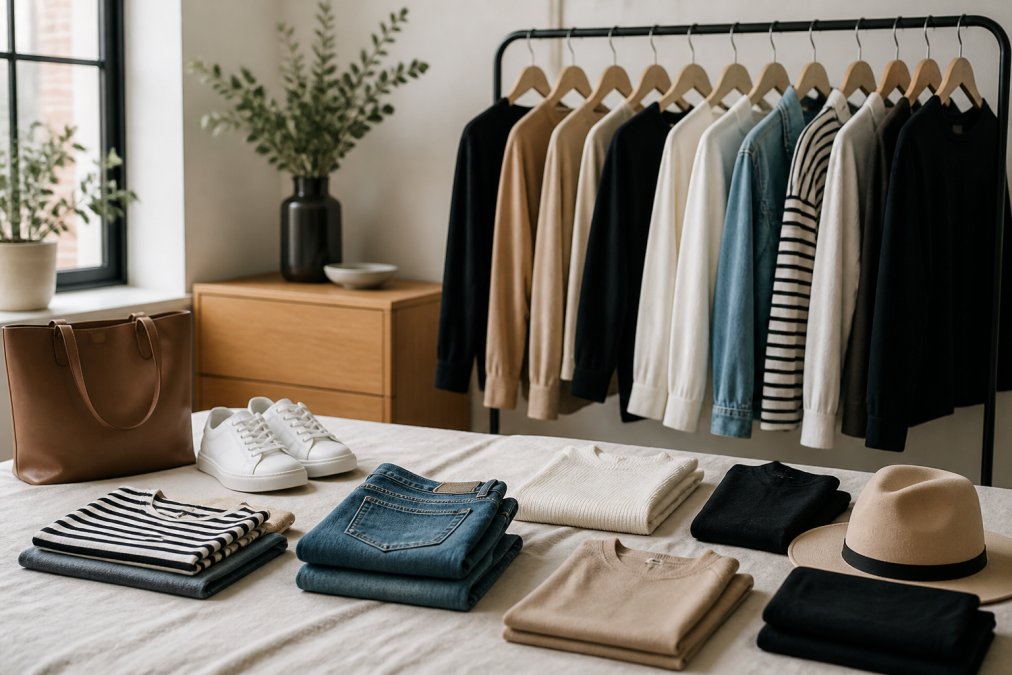
Most people own too many clothes and have nothing to wear. Learning how to build a capsule wardrobe solves that paradox. At Moore Graphics LLC, we believe what you wear tells your story, and a capsule wardrobe is the clearest, most intentional version of that story. This guide covers auditing your closet, defining your style, choosing core pieces, and maintaining them. The 2026 approach includes cost-per-wear math, body-type-specific decisions, and garment care that most guides skip.
What a Capsule Wardrobe Actually Is (and Why It Works)
A capsule wardrobe is a curated collection of high-quality, versatile clothing pieces that work together interchangeably, covering your daily life with minimal redundancy. The concept was popularized in the 1970s by London boutique owner Susie Faux, who argued that a small set of timeless, well-fitting staples would always outperform a bloated closet full of impulse buys.
Decision fatigue is real. When every morning starts with scanning 80 options, mental energy drains before the day begins. A curated collection of 30 to 40 pieces eliminates that friction entirely.
Intentional shopping also counters fast fashion waste. According to the Environmental Protection Agency's textile waste data, Americans send millions of tons of clothing to landfills each year, much of it barely worn. A capsule wardrobe directly counters that by prioritizing versatility over volume. This is not a minimalist aesthetic choice, it's a functional one.
Capsule Wardrobe for Beginners: Your Step-by-Step Starting Point
The biggest mistake beginners make is buying new pieces before understanding what they already own. Start with your existing wardrobe, not a shopping cart.
Step 1: Audit Your Current Closet
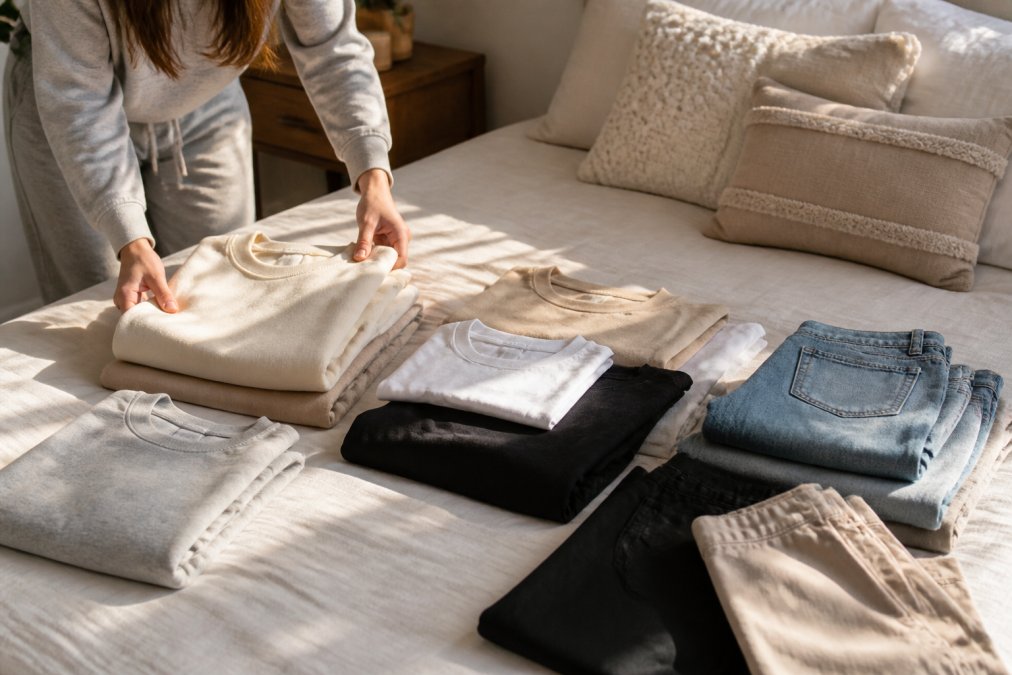
Pull everything out. Sort into three piles:
- Keep: Fits well, worn in the last 12 months, works with multiple other pieces
- Cut: Doesn't fit, damaged, worn fewer than three times, or only works with one specific outfit
- Maybe: Sentimental, seasonal, or situational items needing a second look
A useful rule: if you wouldn't buy it again at full price today, it belongs in the cut pile. Decluttering makes room for pieces that actually earn their place.
Step 2: Define Your Personal Style and Daily Life
Build a wardrobe for your actual life, not your aspirational one. Map your week realistically. If you work remotely five days a week, your capsule needs comfortable everyday wear and casual layers, not blazers. If you're in client-facing meetings, you need stronger professional pieces.
Identify two or three words describing how you want to dress: "relaxed and graphic," "clean and architectural," or "cozy and expressive." Those words become your filter for every purchase.
Step 3: Choose a Neutral Color Palette
The mix-and-match power of a capsule wardrobe depends on color cohesion. Choose two or three neutral tones as your foundation, white, cream, navy, grey, black, camel, or olive, and one or two accent colors.
Any top in your capsule should work with any bottom. Neutral tones also age better than trend-driven colors. A camel coat bought in 2026 will still read as intentional in 2031.
Minimalist Wardrobe Essentials: The Core Pieces That Do the Heavy Lifting
The minimalist wardrobe approach means owning exactly what you need, nothing more. Every piece must earn its spot through versatility, fit, and durability.
Core categories every capsule wardrobe needs:
- Base layer tops: 4-6 well-fitting tees or long-sleeves in your neutral palette
- Sweatshirts or mid-layer tops: 2-3 cozy, versatile options
- Bottoms: 2-3 pairs of pants or jeans; 1-2 skirts or shorts if relevant
- Outer layer: 1-2 jackets or coats, one casual, one polished
- Shoes: 3-4 pairs covering everyday wear, athletic, and elevated options
- Accessories: A hat, a tote bag, and a few intentional accent pieces
Building by Modular Categories
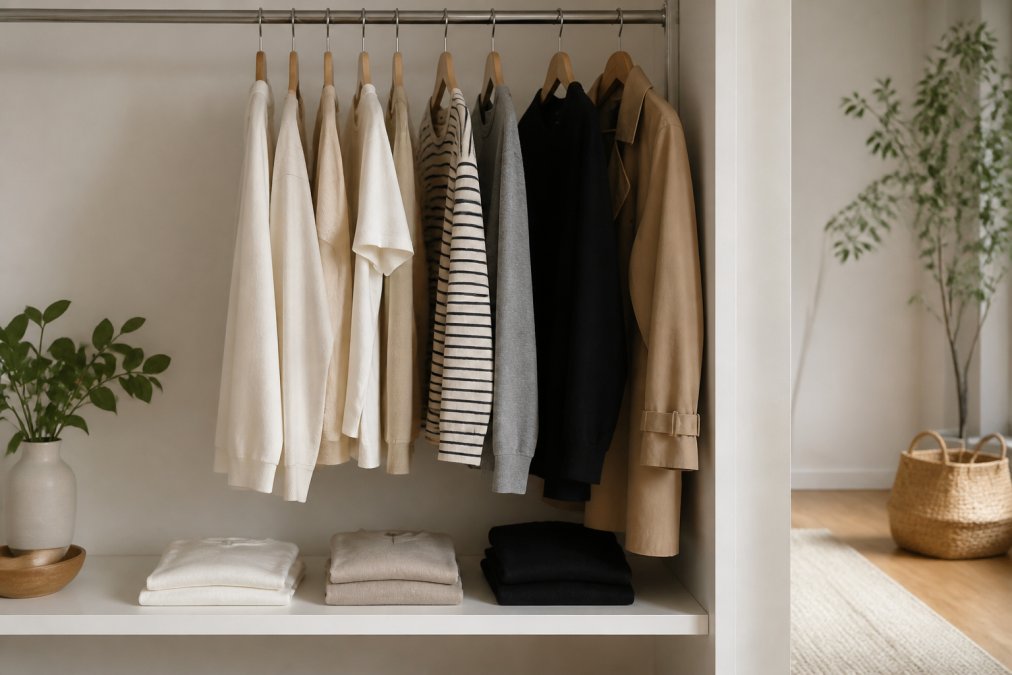
Build your wardrobe in three layers:
- Foundation module: Everyday wear basics, tees, go-to jeans, everyday shoes
- Context module: Pieces that shift your foundation up or down, a blazer that elevates a tee, a hoodie that makes a dress casual
- Accent module: Hats, bags, statement outer layers, or graphic pieces that inject personality
The modular approach makes seasonal rotation easier. Swap a few pieces in the context and accent modules without rebuilding from scratch.
Cost-Per-Wear: The Framework That Changes How You Shop
Cost-per-wear is calculated as: Total item price ÷ Number of times you'll realistically wear it.
A $120 sweatshirt worn 200 times over three years costs $0.60 per wear. A $30 sweatshirt worn 15 times before it pills costs $2.00 per wear. The "cheap" option costs more than three times as much in practice.
This framework reframes every purchase. Instead of asking "Is this expensive?", ask "How often will I wear this, and does that justify the price?" According to the Federal Trade Commission's guide to textile care labels, proper care significantly extends garment life, improving your cost-per-wear calculation.
| Item | Price Paid | Estimated Wears | Cost Per Wear |
|---|---|---|---|
| Quality crewneck sweatshirt | $90 | 180 wears | $0.50 |
| Fast fashion tee | $15 | 12 wears | $1.25 |
| Investment denim | $110 | 200 wears | $0.55 |
| Trend-driven pants | $40 | 20 wears | $2.00 |
| Classic outer layer coat | $200 | 300 wears | $0.67 |
Investment pieces almost always win the cost-per-wear analysis when chosen for versatility and built from high-quality fabrics.
Body Type, Lifestyle, and Fit: Personalizing Your Capsule
Generic capsule wardrobe lists fail because they ignore your body and actual life. Fit is non-negotiable. A $200 blazer that doesn't fit your shoulders will never be worn. A $40 tee that fits perfectly will be reached for constantly.
Different body proportions benefit from different silhouettes. If you carry more weight in your upper body, A-line and straight-leg bottoms create balance. If you're petite, cropped layers and high-waisted bottoms add visual length. If you're tall, longer hems and oversized fits work with your proportions.
Lifestyle specificity matters equally. A capsule wardrobe for a creative studio looks different from one for a nurse, teacher, or remote worker. Build around your highest-frequency contexts first, with secondary contexts covered by versatile crossover pieces.
Ask for every potential addition: "Does this work in at least three different contexts in my actual life?" If not, it's a specialty item, not a capsule staple.
Capsule Wardrobe Checklist: What to Keep, Cut, and Add
Keep if:
- It fits well without alterations needed
- You've worn it at least three times in the past year
- It works with at least three other pieces in your wardrobe
- It fits your color palette
- It reflects your current personal aesthetic
Cut if:
- It hasn't been worn in 12 months (seasonal exceptions aside)
- It only works with one specific outfit
- It fits poorly and you've never gotten it altered
- It was a trend purchase that no longer resonates
- It's damaged and you haven't repaired it
Add if:
- There's a clear gap in your foundation module
- The piece works in multiple contexts in your actual life
- It fits your established color palette
- The cost-per-wear calculation justifies the price
- It's made from high-quality fabrics
Prioritize shopping second-hand before buying new. Thrifting, clothing swaps, and resale platforms offer investment pieces at a fraction of original price. According to ThredUp's annual resale report, the secondhand clothing market continues to grow as consumers shift toward intentional shopping.
Garment Care and Maintenance: Making Quality Last
Buying well is only half the equation. How you care for your clothes determines whether a quality piece lasts three years or ten.
Wash less, and wash cold. Most clothes don't need washing after a single wear unless visibly soiled. Frequent washing accelerates fabric breakdown. Cold water preserves color and reduces shrinkage.
Follow care labels. The FTC Care Labeling Rule requirements require manufacturers to include accurate care instructions. Ignoring them is how a $120 crewneck becomes a crop top.
Store properly. Heavy knits should be folded, not hung. Structured outer layers should be hung on proper shoulder-width hangers. Shoes should be stored with cedar inserts.
Repair before replacing. A loose button, small tear, or worn seam is a 10-minute fix. Replacing a piece because of minor damage is the opposite of intentional wardrobe management.
Seasonal rotation done right. Clean pieces before storage. Storing garments with body oils or food residue attracts pests and sets stains permanently.
The care routine is where the real savings happen. A well-maintained piece at moderate quality will outlast a neglected investment piece.
Conclusion: Building a Capsule Wardrobe Is a Practice, Not a Project
The hardest part isn't choosing the right 30 pieces. It's resisting the pull to treat it as a one-time project rather than an ongoing practice. Styles shift, bodies change, life contexts evolve. Your capsule should evolve with them.
Start with the audit. Define your palette. Run the cost-per-wear math before you buy. Care for what you own.
Frequently Asked Questions
How many items should be in a capsule wardrobe?
Most capsule wardrobes contain between 25 and 50 pieces, including tops, bottoms, outerwear, and shoes. There's no single correct number. The goal is owning only what you actually wear. A tighter edit of 30 well-chosen, mix-and-match staples will serve you better than 60 items where half sit untouched. Start smaller than you think you need, then add intentionally based on gaps you notice over a few weeks.
What is the 3-3-3 rule for a capsule wardrobe?
The 3-3-3 rule is a personal style challenge where you choose 3 items of clothing and wear only those 3 pieces for 3 months. It's a practical exercise for beginners to test which staple pieces they genuinely reach for versus what they own out of habit. It's not a permanent wardrobe strategy, but it's one of the fastest ways to identify your real personal aesthetic and which combinations you actually feel good in day to day.
What are the most common capsule wardrobe mistakes to avoid?
The biggest mistakes are buying pieces that don't work with anything else you own, choosing items based on trend appeal rather than everyday wear potential, and skipping fit. A beautifully made top in the wrong silhouette won't get worn. Other common errors include ignoring your actual lifestyle when planning, building around too many colors that don't coordinate, and failing to account for garment care, quality pieces last only as long as you maintain them properly.
How do I start a capsule wardrobe on a budget?
Start with a wardrobe audit before spending anything. Remove what you don't wear, then identify specific gaps. Shopping second-hand, through thrift stores or resale platforms, gives you access to high-quality fabrics at a fraction of retail prices. Prioritize cost-per-wear: a $60 staple worn 100 times costs less per wear than a $15 impulse buy worn twice. Build slowly, one intentional piece at a time, rather than replacing everything at once.
What is the 5-4-3-2-1 capsule wardrobe method?
The 5-4-3-2-1 method is a packing and wardrobe-planning formula: 5 tops, 4 bottoms, 3 outer layers, 2 pairs of shoes, and 1 hat or accessory. It's commonly used for travel capsules but works as a starting framework for everyday capsule wardrobe planning too. The ratios emphasize mix-and-match versatility, every piece should work with at least three others in the set to maximize the number of outfits from a small curated collection.
How does a capsule wardrobe support sustainable fashion?
A capsule wardrobe reduces consumption by design. Owning fewer, better pieces means buying less frequently, generating less textile waste, and spending more intentionally. Choosing high-quality fabrics that last years over fast-fashion items that wear out quickly is a core principle of slow fashion. Many people building capsule wardrobes also prioritize second-hand shopping and brands with transparent production practices, making the capsule approach one of the most practical paths into sustainable consumption.
Building a wardrobe that actually reflects who you are takes intention, and the right foundational pieces to start from. At Moore Graphics LLC, our curated collection of cozy sweatshirts, everyday tees, and stylish hats is designed to serve exactly that role: versatile, personality-forward staples that earn their place in a capsule wardrobe. Get started with Moore Graphics LLC and build a wardrobe that tells your story, not someone else's.