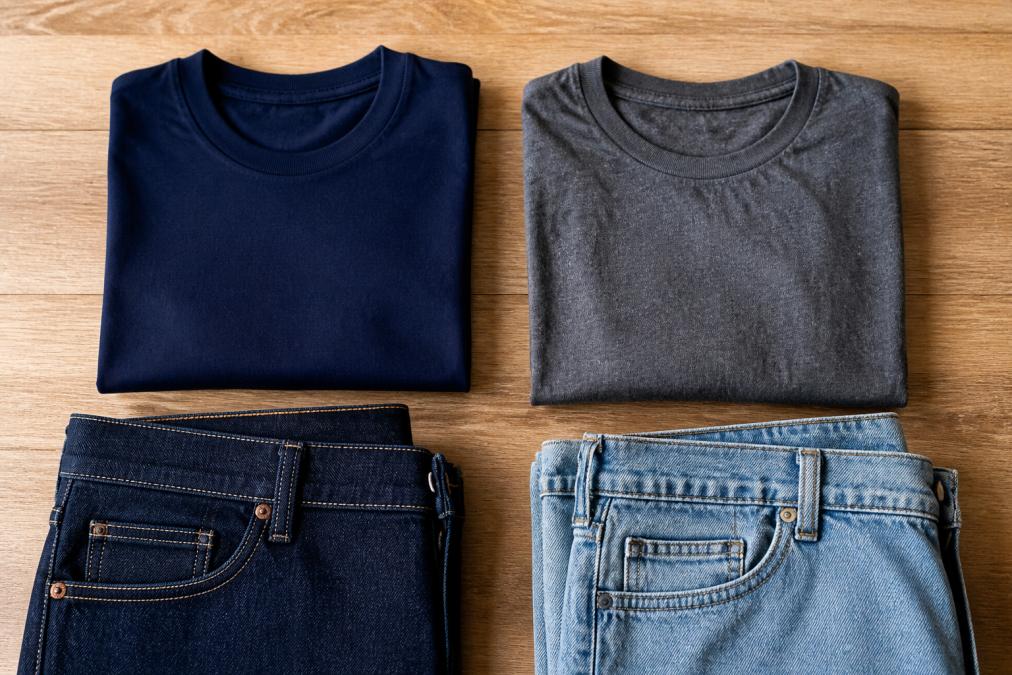
 comparison
Quality vs Budget Clothing Explained: 2026 Guide
Table of Contents
- Quality vs Budget Clothing: The Comparison Table
- What Actually Drives the Price Gap
- How to Identify High Quality Clothing: 5 Inspection Points
- The Cost Per Wear Formula That Changes Your Buying Decisions
- The Mid-Market Trap: When Paying More Doesn't Mean Better
- How to Build a Capsule Wardrobe That Balances Quality and Budget
- Care and Maintenance: The Hidden Factor in Clothing Longevity
- Frequently Asked Questions
Last Updated: September 11, 2026
Quality vs Budget Clothing: The Comparison Table
Quality clothing is built from durable fabric with consistent construction that holds its shape and color through repeated wear and washing, while budget clothing meets a lower price point by reducing fabric weight, thread count, or finishing steps. This guide breaks down the quality vs budget clothing debate, so you can judge a piece by its construction rather than its price tag. Most shoppers assume a higher price guarantees better quality. It doesn't. The gap usually comes down to four things: fiber, stitching, fit, and how you care for it afterward.
| Factor | Quality Clothing | Budget Clothing |
|---|---|---|
| Fabric composition | Higher natural fiber content, denser weave | More synthetic blends, lighter weight |
| Stitching integrity | Reinforced seams, tight stitch density | Loose seams, single-stitch edges |
| Cost-per-wear | Higher upfront, lower over time | Lower upfront, higher over time |
| Fit consistency | True to size, stable after washing | Shifts with shrinkage and pilling |
| Best for | Wardrobe staples, frequent wear | Trend pieces, short-term use |
What Actually Drives the Price Gap
The price gap between quality and budget clothing is driven less by brand name and more by material cost, construction time, and quality control. Denser fabric, more stitching per seam, and a longer finishing process cost more to make, and that shows up at checkout. Brand markup plays a role, but it's rarely the whole story.
Fabric Composition and Material Durability
Fabric composition is the single biggest predictor of how long a garment lasts. Natural fibers like cotton, wool, and linen resist pilling and hold their shape better than synthetics, though blends can balance cost and comfort. Fiber density and textile weight matter as much as fiber type: a heavier cotton knit with a tight weave outlasts a thin one, even if both are labeled "100% cotton."
Garment Construction and Stitching Integrity
Garment construction determines whether a piece survives its first year. Look at seam allowance, stitch density, and finishing details like button quality and zipper hardware. A reinforced seam with a generous allowance holds up under stress; a single-stitched edge with a narrow allowance pulls apart at the shoulder or hip. Mass production often cuts corners here first, because it's the least visible cost to trim.
How to Identify High Quality Clothing: 5 Inspection Points
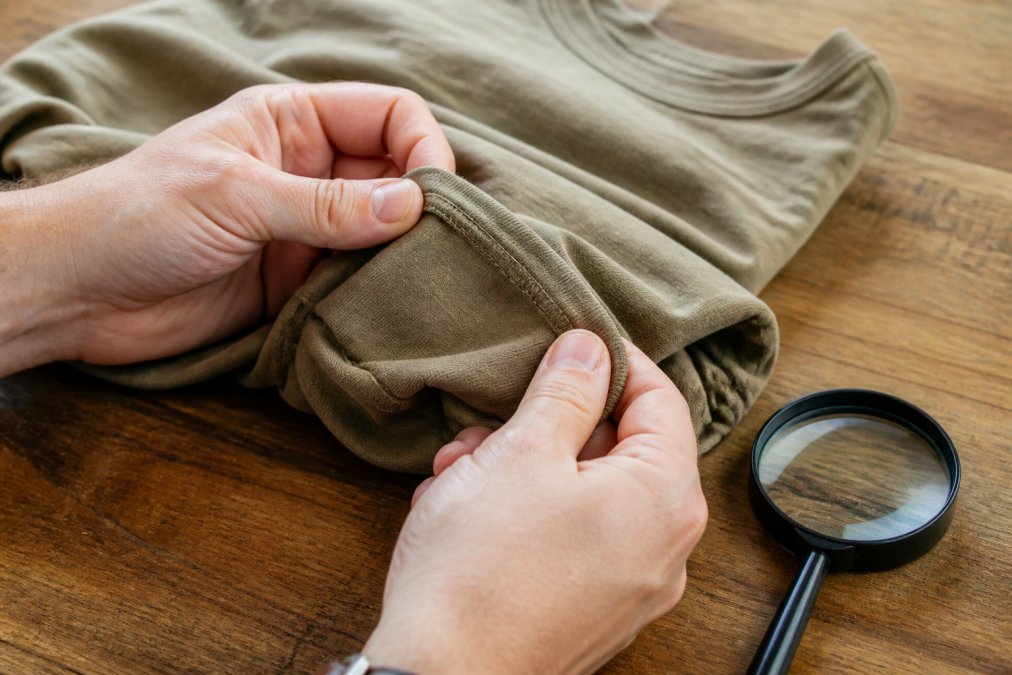
You can identify high quality clothing in under a minute by checking five points: fabric feel, seams, stitching density, hardware, and lining. None require a label or price check, just your hands and eyes. Most guides describe what to look for; this one shows you how to test it in the fitting room without tools.
-
Fabric feel and weight: Pinch the fabric between two fingers. Thin, slippery material that springs back quickly usually signals a high synthetic content and lower durability. At-home test: Hold the fabric up to a light source. If you can see your hand clearly through it, the weave is too loose for everyday wear. A denser weave blocks more light. For knits, stretch a small section and release it. Quality fabric snaps back to its original shape; poor fabric stays stretched or ripples.
-
Seam allowance: Turn the garment inside out. A wider seam allowance (roughly a half-inch or more) gives the fabric room to move without tearing. At-home test: Grip the seam on both sides and pull gently. A well-constructed seam holds firm with minimal gaping. If you can see the stitches separating or the fabric pulling away from the seam line, the allowance is too narrow or the stitching too sparse.
-
Stitching density: Count the stitches per inch along a straight seam. Denser, even stitching resists unraveling better than sparse, uneven lines. At-home test: Run your fingernail along the seam. If you feel individual bumps catching, the stitch density is low. Quality stitching feels smooth and continuous. On a side seam, look for a single row versus a double row of stitching. Double-stitched seams are a reliable marker of construction that will survive repeated washing.
-
Hardware quality: Check buttons, zippers, and snaps. Metal zippers with smooth teeth outlast plastic ones, and buttons sewn with a shank hold better than flat-stitched ones. At-home test: Zip the zipper up and down several times. It should glide without catching or skipping teeth. For buttons, tug gently. A button that shifts or spins easily is loosely attached and likely to fall off within a few wears. Metal snaps should close with a firm, audible click, not a soft press.
-
Lining materials: On jackets and structured pieces, a stitched-in lining (not glued) prevents bunching and extends the garment's life. At-home test: Reach inside the sleeve and pinch the lining where it meets the outer fabric. If it lifts away easily, it is stitched. If it feels fused or stiff, it is glued and will eventually bubble or separate. A stitched lining also allows the garment to move naturally with your body.
These five tests take less than a minute combined and require no special equipment. The goal is to walk into any store, pick up any garment, and know within seconds whether it is built to last or built to sell. Once you run these checks automatically, price tags stop being your only signal of quality.
The Cost Per Wear Formula That Changes Your Buying Decisions
The cost per wear formula divides a garment's price by the number of times you actually wear it. A $60 sweatshirt worn 100 times costs $0.60 per wear, while a cheaper alternative worn five times before it pills costs more per wear despite the lower sticker price. It's the single most useful number in your wardrobe, and almost nobody calculates it.
Cost Per Wear = Purchase Price ÷ Number of Wears
Run the math before deciding a piece is "too expensive." A wardrobe staple you wear weekly will almost always beat a trend piece you wear twice, even when the staple costs several times more upfront. That's the core argument behind investment pieces: you're not paying more, you're paying earlier for something that keeps paying you back.
The Mid-Market Trap: When Paying More Doesn't Mean Better
The mid-market trap is the assumption that spending more than budget pricing automatically gets you better construction. It often doesn't. Plenty of mid-priced garments use the same factories, fabrics, and stitching as cheaper counterparts, with the extra cost going toward marketing, packaging, or retail space. A higher price tag makes us assume higher quality, even when the product is identical.
The jump from budget to mid-market is often the smallest quality gain in the entire price spectrum. The real leap happens between mid-market and genuinely well-made pieces, where you see denser fabric, reinforced construction, and finishing details that budget and mid-tier items skip. If you're going to spend more, spend it where the construction actually changes.
How to Build a Capsule Wardrobe That Balances Quality and Budget
Building a capsule wardrobe means choosing a small set of versatile, well-made pieces that mix and match, rather than filling your closet with cheap items you replace constantly. A practical capsule usually runs 25 to 35 pieces, weighted toward neutral staples you can wear across seasons (thegoodtrade.com). The goal isn't to spend the most money, it's to spend where cost-per-wear is lowest.
Start with the pieces you wear most: tees, sweatshirts, jeans, and a versatile jacket. Buy quality where the garment takes daily abuse, and save on trend-driven pieces you'll wear for one season. Moore Graphics offers a curated collection of apparel and lifestyle goods designed to help you wear your story. From cozy sweatshirts and trendy tees to stylish hats and unique glassware, our products are crafted to bring comfort and personality to your everyday life. Whether you are looking for a personal treat or a thoughtful gift, our mugs and tote bags provide the perfect blend of style and utility. For pieces you'll wear constantly, prioritize fabric composition and stitching integrity over the newest colorway.
| Capsule Slot | Spend Strategy | Why |
|---|---|---|
| Everyday tees and sweatshirts | Buy quality | Highest wear frequency |
| Trend pieces | Buy budget | Short lifespan by design |
| Outerwear | Buy quality | Structural, hard to replace |
| Accessories (hats, totes) | Mid-range | Balances cost and durability |
Care and Maintenance: The Hidden Factor in Clothing Longevity
Care and maintenance often matter more than the price tag for clothing longevity. Washing in cold water, turning garments inside out, and air-drying can add years to a piece's life, regardless of what you paid (energy.gov). Heat and agitation break down fibers, cause shrinkage, and fade color, not the original price. Proper care can actually narrow the quality gap: a budget garment treated well can outlast a premium garment treated poorly.
A few habits protect your investment pieces:
- Wash in cold water to reduce shrinkage and color loss
- Turn prints and knits inside out before washing
- Air-dry when possible; high heat is the fastest way to destroy elasticity
- Use mesh bags for delicates and anything with hardware
- Store knits folded, not hung, to prevent stretching
Colorfastness and pilling are the two most visible signs of wear, and both accelerate with hot water and tumble drying. Treat a well-made garment gently and it will outlast three cheap replacements, and a cheap one treated well might surprise you too.
How Care Habits Narrow the Quality Gap
The quality gap between budget and premium clothing is not fixed. Where a garment falls depends heavily on how it's treated after purchase. A budget cotton tee washed in cold water and air-dried can hold its shape and color for years; the same tee washed in hot water and tumble-dried on high heat may pill, shrink, and fade within months. The garment didn't change, the care did.
This reframes the budget versus quality decision. If you invest time in proper care, the practical difference between a mid-tier and a premium garment shrinks. You're not just buying fabric and stitching, you're buying the potential for longevity, realized only through maintenance.
The Mechanics of Fabric Breakdown
Three forces do most of the damage to fabric:
- Heat: Hot water and high dryer temperatures cause natural fibers like cotton and wool to shrink and synthetic fibers to lose elasticity. Heat also sets stains and accelerates color fading.
- Agitation: The tumbling motion of a dryer and the friction of a washing machine break down fiber surfaces, leading to pilling and thinning. The more a garment is agitated, the faster it wears.
- Chemicals: Harsh detergents and bleach strip natural oils from fibers, leaving them brittle. Fabric softeners can coat fibers and reduce absorbency over time.
Garments often fail not because they were cheaply made, but because they were washed aggressively. Reducing heat, agitation, and chemical exposure extends the life of any garment, regardless of its original quality tier.
A Practical Care Routine That Works for Any Budget
You don't need specialty products or a complicated system. A few consistent habits make the biggest difference:
- Sort by fabric weight, not just color. Heavy items like jeans and towels abrade lighter fabrics in the wash. Separate them.
- Use the shortest cycle that gets the job done. Delicate or quick-wash cycles reduce agitation time.
- Measure detergent. Most people use two to three times the recommended amount, which leaves residue that attracts dirt and dulls colors (cleaninginstitute.org).
- Dry flat or hang dry when possible. If you must use a dryer, choose low heat and remove items while slightly damp.
- Address stains immediately. The longer a stain sits, the more it sets, and the more aggressive the treatment needed to remove it.
When Care Cannot Save a Garment
Proper care extends life, but it cannot fix structural defects. A single-stitched seam with a narrow allowance will eventually fail no matter how gently you wash it, and thin, loosely woven fabric will wear through at stress points regardless of care. Care is a variable you control, and controlling it gives you more flexibility in what you buy.
A budget garment with decent construction and excellent care can outperform a premium garment with poor care. Price is a starting point; care determines where you finish.
Frequently Asked Questions
Does a higher price tag always guarantee better clothing quality?
No. Price reflects brand markup, marketing spend, and retail overhead as much as material and construction. A $200 shirt from a luxury label may use the same fabric mill as a $60 direct-to-consumer brand. The reliable quality signals are fabric composition, stitching integrity, and finishing details like button quality and zipper hardware. Inspect those directly rather than trusting the price tag alone.
What is the cost per wear formula and how do I use it?
The cost per wear formula divides the purchase price by the number of times you expect to wear the item. A $120 pair of boots worn 200 times costs $0.60 per wear. A $30 pair worn 15 times costs $2.00 per wear. This reframes budget versus quality: the cheaper item often costs more over time when it pills, fades, or loses shape after a few washes.
How can I build a durable wardrobe on a limited budget?
Start with a capsule wardrobe of 25 to 35 pieces that mix and match. Spend on wardrobe staples you wear weekly (jeans, outerwear, shoes) and save on trend-driven items. Use the cost per wear formula to justify investment pieces. Look for natural fibers, reinforced seams, and consistent fit. Prioritize fit consistency and tailoring over quantity, and care for garments properly to extend their life.
Are there specific clothing items worth spending more money on?
Yes. Outerwear, shoes, denim, and tailored jackets benefit most from higher quality construction because they endure daily wear and are hard to replace cheaply. A well-made coat with quality lining materials and sturdy zipper hardware can outlast three budget alternatives. Basics like t-shirts and tank tops can stay budget-friendly if you check for stitching integrity and avoid thin, sheer fabrics.
How does fast fashion impact the long-term cost of clothing?
Fast fashion lowers upfront prices by using thinner fabrics, shorter seam allowances, and synthetic materials that pill and lose colorfastness quickly. A $15 top worn five times costs $3.00 per wear, while a $60 top worn 60 times costs $1.00 per wear. Mass production also skips quality control steps, meaning shrinkage and seam failure are common. The real expense shows up in frequent replacements.